Washers & Dryers
Washing Machine Repair for South Bend Homes
A washer that stops full of water, won't spin or walks across the floor leaves you with wet laundry and a mess. We find the failed pump, switch, belt or coupler and get the machine running again.
- Calls answered 24/7
- Drain, spin and leak faults
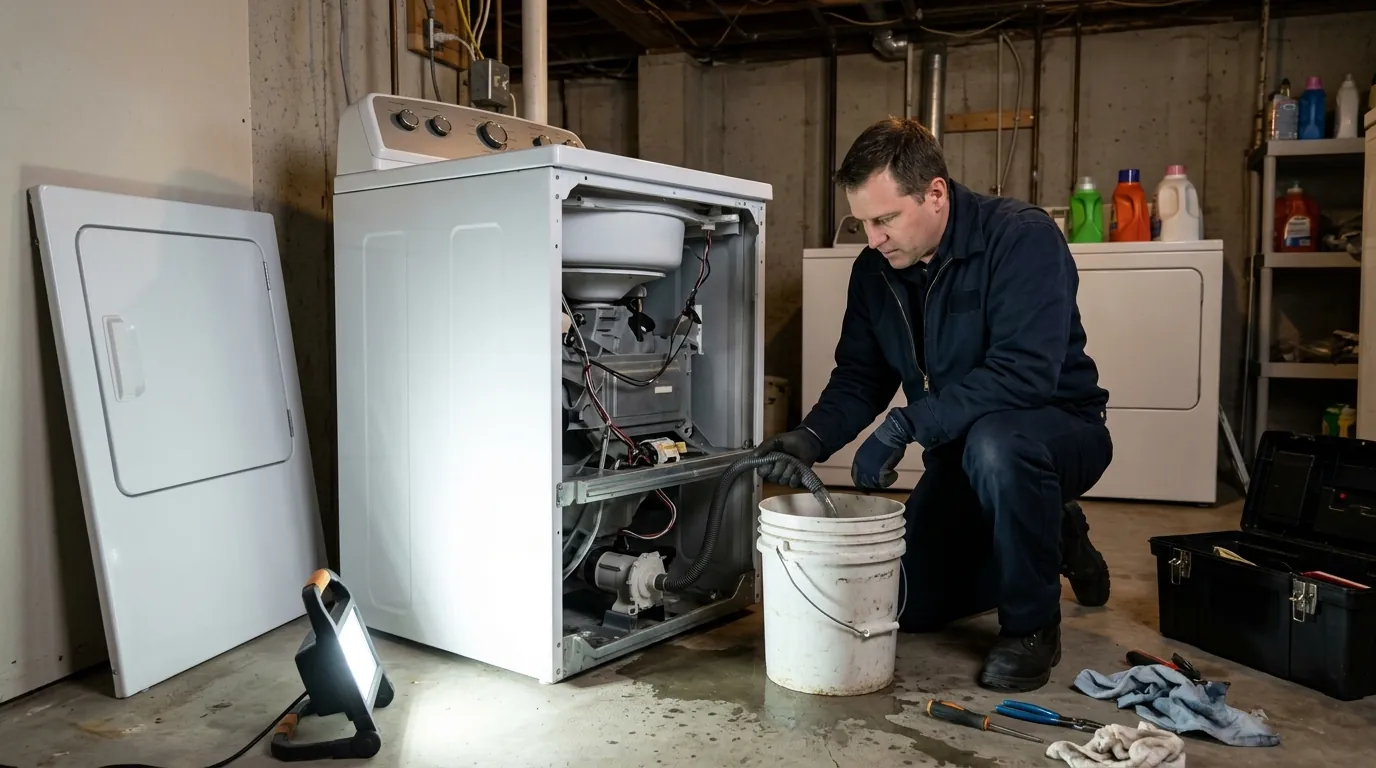
Washer repair in South Bend usually starts with a drain or spin complaint, and the cause is often a clogged pump, a failed lid switch or a worn drive part. We test each one on site, confirm the fault with a meter or by hand, and replace only what failed.
The problem
Washer Repair in South Bend: What Usually Goes Wrong
Most washer calls come down to water that won't leave the tub or a basket that won't turn. On a top-loader those symptoms share suspects: a pump jammed with a sock, a lid switch that no longer tells the control the lid is shut, or a coupler or belt that slips under load. We check the likely parts first instead of guessing at a control board.
We repair Whirlpool, Maytag, GE, Speed Queen, Samsung and LG washers, direct-drive and belt-drive. If the transmission is grinding on an older machine, we tell you plainly when the repair costs more than the washer is worth, so you decide before we order anything. Most of the time, though, a stalled top-loader needs one inexpensive part.
Warning signs
Signs Your Washer Needs a Technician Now
Water left in the tub
Standing water after the cycle ends means the pump, hose or drain circuit has failed, and the next fill can overflow.
Burning smell on spin
A hot rubber or electrical odor often means a slipping belt or a stalled motor. Stop the cycle and unplug the washer.
Banging or grinding
Banging on spin can be a broken suspension spring; grinding during agitation can be the transmission.
Water on the floor
Any puddle under the washer is worth a call, since slow leaks soak subfloors and basement storage.
Tripped breaker or GFCI
A washer that trips its circuit can have a shorted motor or a wire touching the cabinet.
Washer Not Draining: Pump, Hose and Filter Checks
You open the lid to standing gray water, or the cycle stalls before spin. We drain the tub, then check the drain hose for kinks, the pump inlet for socks, hair ties and coins, and the pump motor for voltage and a seized impeller. On many top-loaders the pump is reached by tipping the cabinet or removing the front panel. A pump that gets power but won't turn is replaced. If it never gets power, we trace the wiring and lid circuit back toward the control.
Washer Not Spinning or Spinning Slowly
The tub fills and agitates, but the clothes come out soaked. On direct-drive Whirlpool and Maytag designs the usual cause is a motor coupler whose plastic drive forks have sheared; it is an inexpensive part built to fail so the motor and gearcase don't. Belt-drive machines lose spin to a glazed or broken belt or a worn clutch. Newer washers with a rotor and stator can lose spin to a failed hall sensor or shift actuator, which we test before suggesting a board.
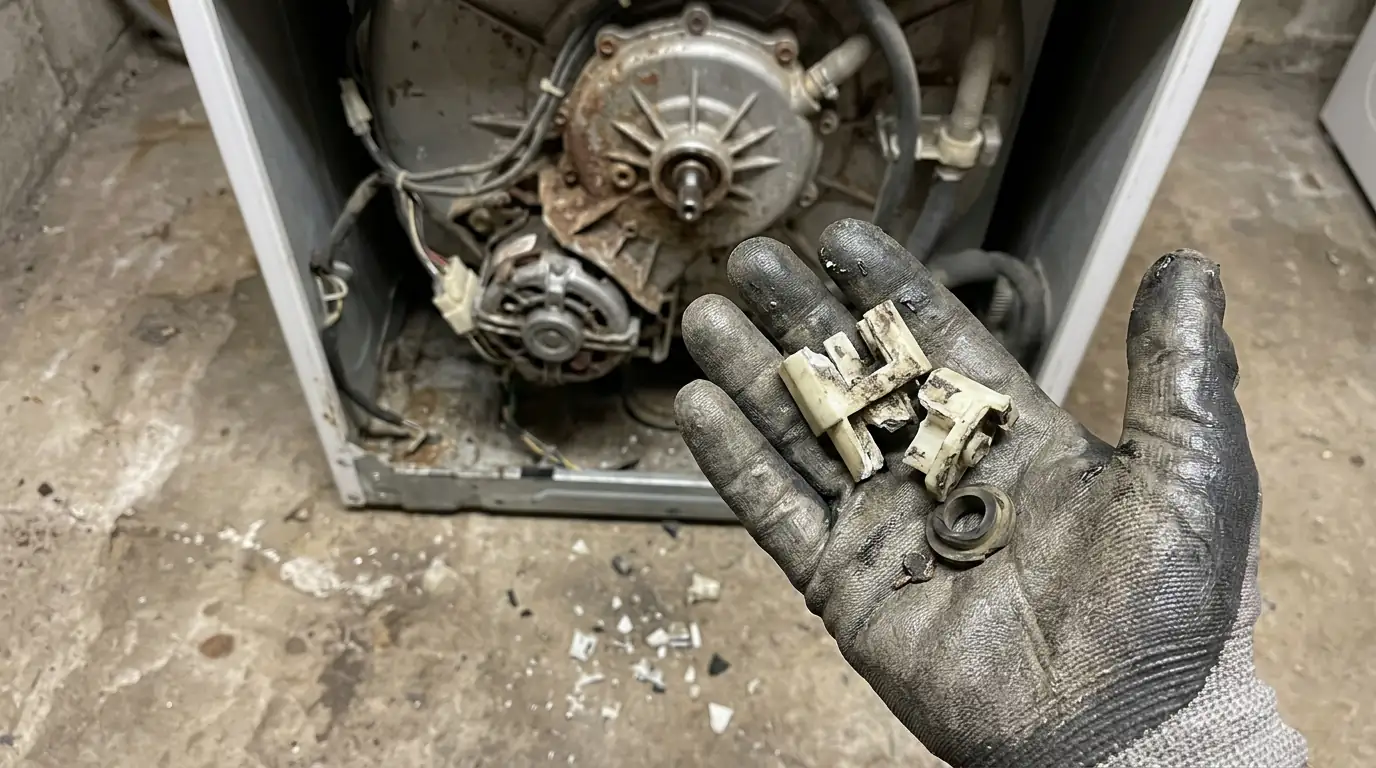
Top-Load Agitator and Transmission Problems
An agitator that turns only one way, clicks without moving clothes or wobbles loose usually has worn agitator dogs (small plastic cogs) or a stripped spline at the top of the drive shaft. Both are quick fixes. A loud grind during agitation, oil under the machine or a basket that turns freely by hand in both directions points deeper, at the transmission or gearcase. That repair is labor-heavy, so we price it against a new washer before starting, and you choose.
Washer Leaking Onto the Floor
Where the water shows up tells us a lot. Water at the back during fill points to a fill hose, a cracked inlet valve body or a loose connection at the faucet. Water during drain points to the pump seal or a split drain hose. A slow seep from under the center of a top-loader can mean a failed tub seal, which is a bigger job. We run the machine with panels off so we can watch the leak happen rather than guess at it.
Lid Lock Faults and Washer Error Codes
Newer top-loaders lock the lid before agitating and spinning. When the lock assembly fails, you get a flashing lid light, an error code, or a washer that hums and never starts. We read the code, run the model's service test where it has one, and check the lock's switch and solenoid for continuity. A code names a circuit, not a part, so we test before replacing anything. Unbalanced-load codes are often a leveling or suspension problem, and we check springs and dampers when we see them.
Any hour
Washer Repair problem right now?
Call and tell us what the appliance is doing. Phones are answered day and night, and we will get a technician scheduled.
Downtime
How Long Will the Washer Be Out of Service?
Downtime depends on the part. A coupler, lid switch, pump or hose is a standard part for most models, so the repair is short once the part is in hand. A model-specific control, transmission or tub seal may have to be ordered, and the supplier's lead time then sets the wait. Until then we leave the washer drained and tell you whether it can safely run a partial cycle.
Step by step
How We Track Down a Washer Fault
Hear the symptom
You tell us what the washer does and when. We read any code and note whether it fails on fill, agitate, drain or spin.
Drain and open it up
We empty the tub, pull the panel or lift the cabinet, and get eyes on the pump, coupler, belt and hoses.
Test, don't guess
Switches and the lid lock get a continuity check, the pump and motor get a voltage check, and drive parts get turned by hand.
Repair and run a cycle
We replace the failed part, run a full cycle with you watching, and check the floor and hose connections for drips before we leave.
Local conditions
Why This Repair Looks Different in South Bend
South Bend averages 64.5 inches of snow a year and January lows average 16.1F, so a washer in an unheated porch, garage or cold corner of a basement can freeze the water left in its pump and hoses. A frozen pump may crack, or simply refuse to drain until it thaws. City water here is also very hard, around 19 to 24 grains per gallon, and that mineral load collects on the fine screens inside the inlet valve, which shows up as slow filling.
Cost factors
What Shapes the Cost of a Washer Repair
National planning ranges reported by This Old House put washer or dryer repair at $100 to $650, average about $300, and the Inch Calculator appliance repair cost guide lists washing machine repair at $125 to $500. Neither is our price; the diagnosis sets the real number.
Dollar figures are typical national planning ranges reported by This Old House appliance repair cost guide and Inch Calculator appliance repair cost guide. They are not a quote and not our price; your cost depends on the diagnosis.
Which part failed
A motor coupler, lid switch or drain pump is a modest part. A transmission, tub seal or main control sits at the high end of any range.
Drive design
Direct-drive top-loaders open from the front quickly. Belt-drive and older machines may need the cabinet lifted off and the tub assembly worked around.
Access and location
A washer in a tight closet or down narrow basement stairs takes longer to pull out, level and reconnect than one in an open laundry room.
Age of the machine
On an older washer we weigh the repair against what a replacement costs, and we tell you when fixing it is no longer the sensible call.
Brands we repair
- Whirlpool
- Maytag
- KitchenAid
- GE
- Frigidaire
- Samsung
- LG
- Bosch
- Electrolux
- Amana
- JennAir
- Sub-Zero
- Wolf
- Speed Queen
FAQ
Washer Repair Questions From South Bend Homeowners
On direct-drive Whirlpool and Maytag top-loaders the motor coupler is the most common cause: its plastic forks shear, so the motor turns without moving the tub. Belt-drive models lose spin to a broken belt or worn clutch, and newer machines stop spinning when the lid lock doesn't confirm. We check each in that order.
We wouldn't. A small leak at the pump seal or a fill hose usually gets worse, and water under a washer soaks into the subfloor or basement storage before you notice. Turn off the faucets behind the machine between loads and give us a call so we can find the source with the panels off.
Yes. South Bend city water runs about 19 to 24 grains per gallon, and those minerals collect on the small screens inside the washer's inlet valve and at the hose ends. Filling slows, and some washers then throw a fill error. We clean or replace the screens, or replace the valve if its coil is weak.
The control won't agitate or spin until the lock reports the lid closed and latched. A flashing light usually means the lock assembly's switch or solenoid has failed, a wire at the lid hinge has broken, or something is jamming the latch. We test each with a meter before replacing anything.
It depends on the fault. A coupler, pump, switch or belt is usually worth fixing at any age, because the rest of the machine keeps working. A transmission or tub seal on an older washer can cost close to a new machine, and we'll say so before ordering parts.
Related repairs
More Washers & Dryers Repairs We Handle
From our appliance tips: Washer Not Draining? Causes, Safe First Steps and When to Call and How South Bend's Hard Water Wears on Dishwashers, Washers and Ice Makers.
Phones answered 24/7
Washer Stopped Mid-Load?
Leave the water in the tub, unplug the machine if it smells hot, and give us a call. We answer 24/7 and will talk you through what to do until a technician gets there.