Washers & Dryers
Front-Loader Repair for South Bend Laundry Rooms
Front-loaders fail in their own ways: a jet-engine roar on spin, a sour smell from the door seal, water trapped behind the glass or a door that stays shut. We repair those faults on LG, Samsung, Whirlpool, Maytag and Electrolux machines.
- Calls answered 24/7
- Bearing and spider arm work
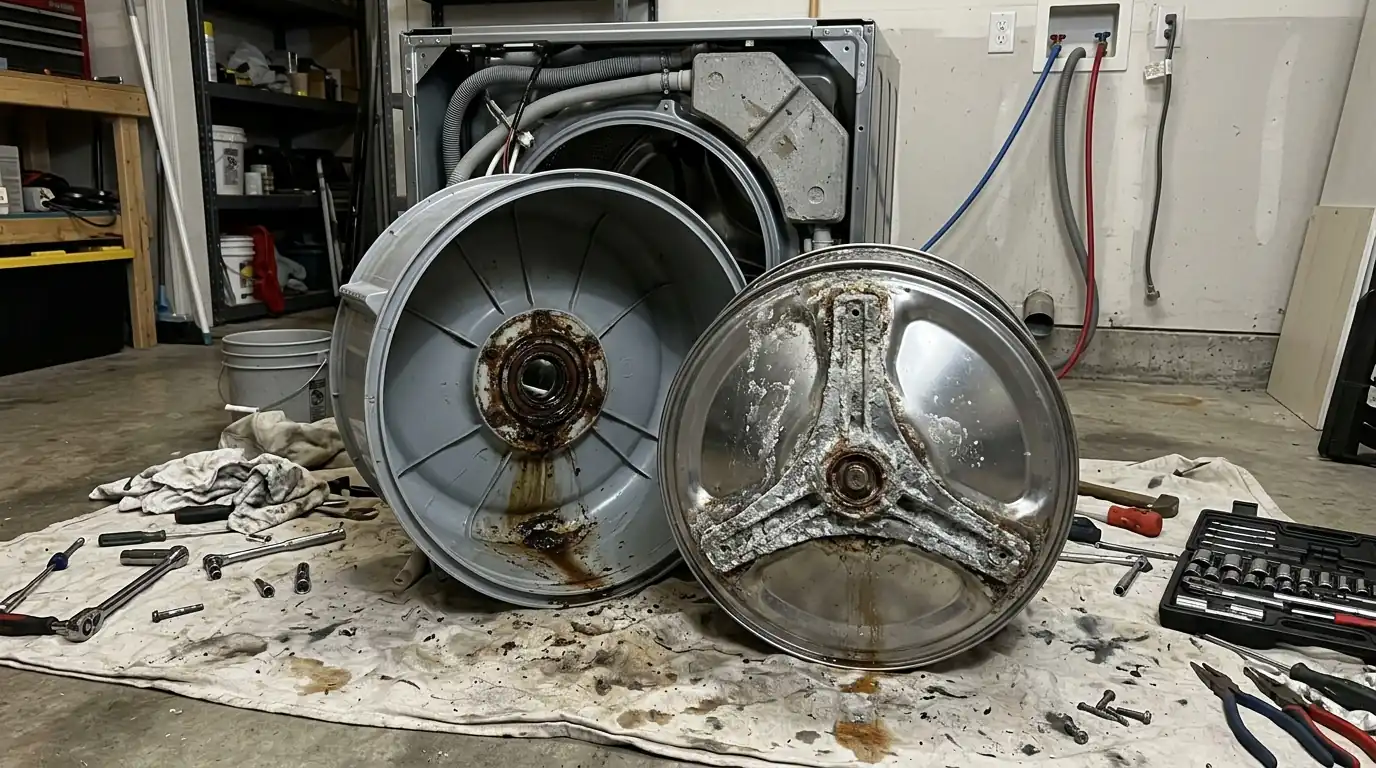
Front-load washer repair in South Bend most often means a worn drum bearing, a torn door boot, a clogged drain pump filter or a failed door lock. We confirm which by lifting the drum to feel for play, inspecting the boot fold and testing the lock, then tell you whether the repair makes sense.
The problem
Front-Load Washer Repair in South Bend: What Usually Goes Wrong
A front-loader holds water against the door with a rubber boot, spins a heavy drum on a rear bearing pack, and won't start until the door lock confirms. Those three systems cause most of the trouble. The drum also bolts to a cast aluminum spider arm, which corrodes where it meets the stainless drum, so a bearing job sometimes uncovers a second problem.
Many front-loaders hide a drain pump filter behind a small kick-panel door, and that one is worth learning to clean yourself. The deeper work on bearings, spider, boot and lock means taking the machine apart, and we do it with the right pullers and new seals so the fault doesn't return.
Compare your options
Repair the Bearings or Replace the Front-Loader?
| Bearing repair | New washer | |
|---|---|---|
| Best fit | Newer, higher-end machine with a split tub | Older machine or a sealed-tub design |
| Parts | Bearings, seal, often a spider arm | None, plus hookup and haul-away |
| Labor | Heavy teardown and rebuild | Hookup and leveling |
| Wait | Depends on parts being ordered | Depends on store delivery |
| Main risk | Hidden spider or shaft corrosion | Higher upfront spend |
Cost factors
Front-Loader Repair Costs: What Moves the Number
Our cost sources don't break out front-loader bearing work by itself. The Inch Calculator appliance repair cost guide reports appliance repair labor at $50 to $150 per hour as a national planning range, and these jobs differ mostly in how many hours of teardown they take.
Dollar figures are typical national planning ranges reported by Inch Calculator appliance repair cost guide. They are not a quote and not our price; your cost depends on the diagnosis.
Bearing versus boot
A boot or pump is a moderate repair. A bearing job means separating the tub, which takes far more labor and often a spider arm too.
Tub design
Some brands bolt the tub halves together and sell bearings separately. Others seal the tub, so the bearing only comes with a whole new outer tub.
Pedestal and stacking
A washer on a pedestal or under a dryer has to come down and go back up, which adds time to any repair.
Collateral damage
A bearing that ran noisy for months can scar the shaft or crack the spider, and we price those finds before going further.
Drum Bearing and Spider Arm Failure
A roar that builds with spin speed, rust-colored streaks down the back of the drum, or a drum that rocks when you lift its lip are classic bearing symptoms. Water gets past a failed shaft seal, washes out the grease, and the bearings follow. The fix means splitting the outer tub, pressing out the old bearings, fitting new bearings and seal, and inspecting the spider arm. A corroded or cracked spider gets replaced too, because new bearings on a bad spider won't last.
Door Boot Seal Tears and Odors
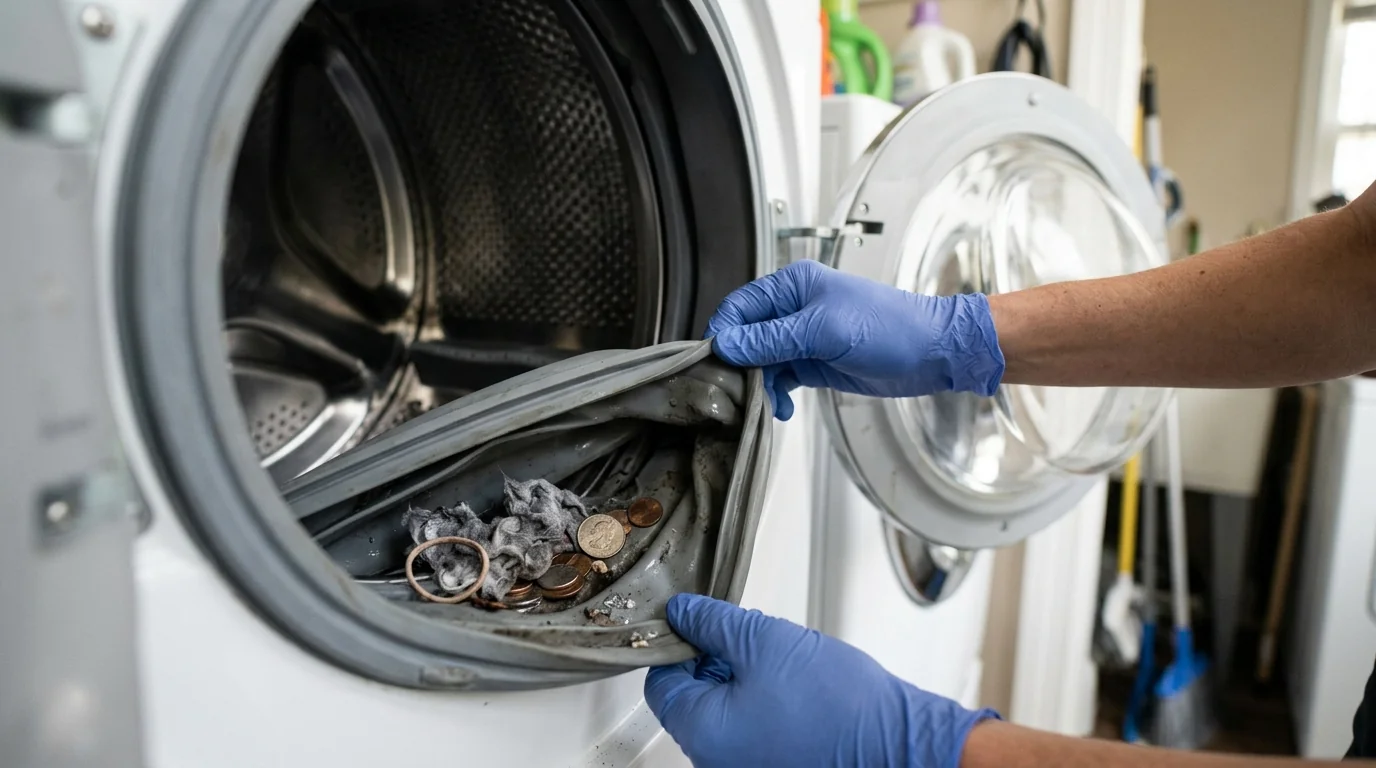
The rubber boot between the door and tub collects lint, hair, coins and detergent sludge in its lower fold. That is where the musty smell starts, and where an underwire or zipper eventually cuts a slit that drips onto the floor during wash. We pull the boot, check the tub lip and drain path behind it, and fit a new boot with fresh clamping rings. Odor without a tear often clears with a deep cleaning and a smaller detergent dose.
Drain Pump and Coin Trap Clogs
Water left behind the glass, a long hum at the end of a cycle or a drain error usually starts at the coin trap, the screen in front of the pump. Socks, coins, bobby pins and lint wad up there. We clear the trap and the hose from the tub to the pump, then test the pump motor. A cracked impeller or a motor that hums without turning means a new pump. Some models also carry a recirculation pump that fails the same way.
Front-Load Door Lock Faults
If the door won't lock, the washer won't fill. If it won't release, your clothes are stuck inside. The lock assembly carries a switch, a wax motor or solenoid, and a latch that breaks if the door is forced. We check the hook on the door, test the lock with a meter and confirm the control is sending it power. A door that stays locked with the power off usually still has water inside or a lock stuck in its closed position.
Any hour
Front-Load Washer Repair problem right now?
Call and tell us what the appliance is doing. Phones are answered day and night, and we will get a technician scheduled.
Before you call
Front-Loader Care You Can Handle, and Where to Stop
Safe to check yourself
- Clean the coin trap filter behind the kick panel, with towels and a shallow pan ready for the water.
- Wipe out the boot fold and leave the door ajar between loads so it dries.
- Use HE detergent at the dose for your water hardness, not a full cap by habit.
- Run the washer's clean cycle monthly with a washer cleaner.
Leave these to a technician
- Bearing, seal and spider arm replacement, which needs pullers and a full teardown.
- Door boot replacement, where the clamping rings are easy to seat wrong.
- A door lock that won't release with water still inside.
- Anything that means lifting the drum or counterweights, which are heavy enough to injure.
Local conditions
Why This Repair Looks Different in South Bend
South Bend's water averages 330 to 410 mg/L as calcium carbonate, and that matters more to a front-loader than you might expect. Hard water ties up detergent, so people pour more, and an HE machine given too much soap leaves residue in the boot fold and outer tub where odor begins. The city suggests starting a softener at 19 grains per gallon; if your home has one, you can usually cut the dose. Front-loaders with a built-in heater can also scale up the element.
Step by step
How a Front-Loader Bearing or Boot Job Runs
Confirm the noise or leak
We spin the drum by hand, lift it to feel for play, and run a short cycle to hear and see the fault ourselves.
Check tub construction
We look up whether the model's tub splits or comes as a sealed assembly, because that decides the parts and the price.
Tear down and inspect
Top, front panel, boot, counterweights and tub come apart, and we inspect the spider, shaft and bearing seats before ordering.
Rebuild and test
New bearings, seal, boot or lock go in, followed by a full spin at top speed and a leak check around every clamp.
Brands we repair
- Whirlpool
- Maytag
- KitchenAid
- GE
- Frigidaire
- Samsung
- LG
- Bosch
- Electrolux
- Amana
- JennAir
- Sub-Zero
- Wolf
- Speed Queen
FAQ
Front-Load Washer Repair Questions From South Bend Homeowners
That rising roar is almost always the rear drum bearings. Water got past the shaft seal, washed out the grease and the bearings began to wear. It gets louder and can eventually let the drum rub the tub. We confirm it by lifting the drum to feel for play and looking for rust streaks behind it.
Pull back the lower fold of the boot and clean out the lint and sludge, run the clean cycle with a washer cleaner, and leave the door open between loads. Cut detergent to the HE dose. If the smell comes back quickly, the boot may be torn or the drain path behind it may be holding water, which we can inspect.
First check for water behind the glass; if there is some, the lock usually stays engaged by design. Run a drain and spin, or switch the washer off for a few minutes and try again. If it still won't release, don't force the handle, which breaks the hook. Give us a call and we'll open it safely.
Usually, yes. Softened water lets detergent work at a lower dose, and front-loaders use so little water that extra soap stays in the tub and boot. Start at the low line on the detergent cap and adjust. If suds are still in the drum at the end of a cycle, you're using too much.
It depends on the model's tub. Many split into halves, so we press out the old bearings and fit a new seal. Some sealed-tub designs only sell the bearing with a new outer tub, which costs more. We look up your model number before pricing the job, so you know which kind you have.
Related repairs
More Washers & Dryers Repairs We Handle
From our appliance tips: Washer Not Draining? Causes, Safe First Steps and When to Call.
Phones answered 24/7
Front-Loader Roaring or Leaking?
Stop running heavy loads, leave the door open to dry, and give us a call. We answer 24/7, and we'll tell you whether your machine is worth the bearing or boot repair.