Ovens, Ranges & Cooktops
Gas and Electric Oven Repair in South Bend
An oven that won't heat, bakes unevenly or stays locked after a self-clean usually has one failed part behind it: an igniter, an element, a sensor or a door lock. We find it with a meter, not by swapping parts.
- Calls answered 24/7
- Gas and electric ovens
- Wall ovens
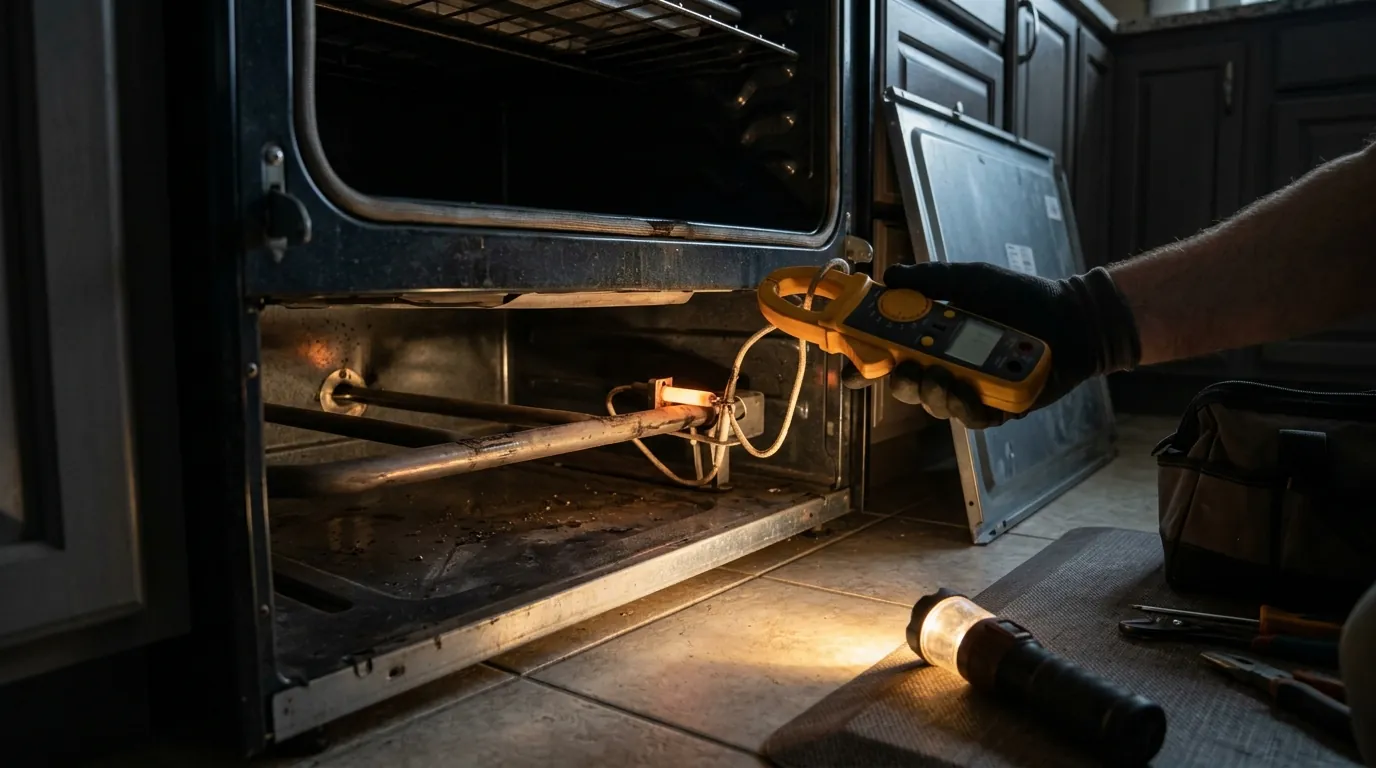
Oven repair in South Bend most often comes down to a weak gas igniter, a burned-out bake or broil element, a failed temperature sensor or a stuck self-clean lock. We measure igniter current, element resistance and sensor readings to pin down the fault, then replace that part and verify temperature.
The problem
Oven Repair in South Bend: What Usually Goes Wrong
A gas oven and an electric oven fail differently. In a gas oven the hot surface igniter does two jobs: it lights the gas and it draws enough current to open the bimetal safety valve. An igniter can still glow and yet draw too little current, so the valve never opens. In an electric oven the bake and broil elements are the heat, and a break in either one is usually easy to confirm.
Both types share the parts that control temperature: a sensor probe at the back of the cavity, a control board, and, on many ovens, a self-clean door lock. We repair freestanding ranges and wall ovens, single and double, from Whirlpool, GE, Frigidaire, KitchenAid, Bosch, Samsung and LG. When a fault code points at the control board, we still test the sensor and wiring first, since a board is the costliest guess.
Warning signs
Oven Warning Signs to Act On
Gas smell that lingers
A brief whiff at ignition is normal. A smell that stays means turn the oven off, leave the house and call your gas utility.
Igniter glows but no flame
Gas isn't opening. Don't keep cycling the oven on and off; the igniter or valve needs testing.
Sparks or a bang from the element
An electric element has shorted. Turn off the oven at the breaker and leave it off.
Door locked after self-clean
Wait for the oven to cool fully. If it still won't release, the lock assembly or control needs a look.
Error code on the display
Write it down before resetting. It names the circuit that failed and speeds up diagnosis.
Gas Oven Igniter Replacement
You set the oven to 350, hear nothing, and after a minute or two the bottom stays cold, or it heats slowly and never reaches temperature. Look through the broiler drawer or the bottom panel: an igniter that glows dull orange but never lights the burner is the classic weak igniter. We measure the current it draws with a clamp meter, because the safety valve needs a minimum amperage to open. A low reading means a new igniter, and we confirm the burner lights cleanly afterward.
Electric Bake and Broil Element Failure
A bake element that has failed often shows it: a blister, a split or a bright spot where it shorted, sometimes with a bang and a tripped breaker. Others fail invisibly, so we test the resistance across the terminals. Replacement means removing the element from the back wall, checking the terminal wires for heat damage and fitting the new one. Burned or brittle wire ends get repaired too, because a loose terminal will burn out the new element in short order.
Oven Temperature Off or Uneven
Cakes burned on the edges, roasts that take an hour longer than the recipe, or a display temperature that doesn't match an oven thermometer. We start with the temperature sensor at the back of the cavity, which should read a specific resistance at room temperature. Then we check the door gasket for gaps, the igniter or element for slow heating, and the convection fan if the oven has one. Small offsets can often be corrected in the control's calibration setting.
Wall Oven Repair
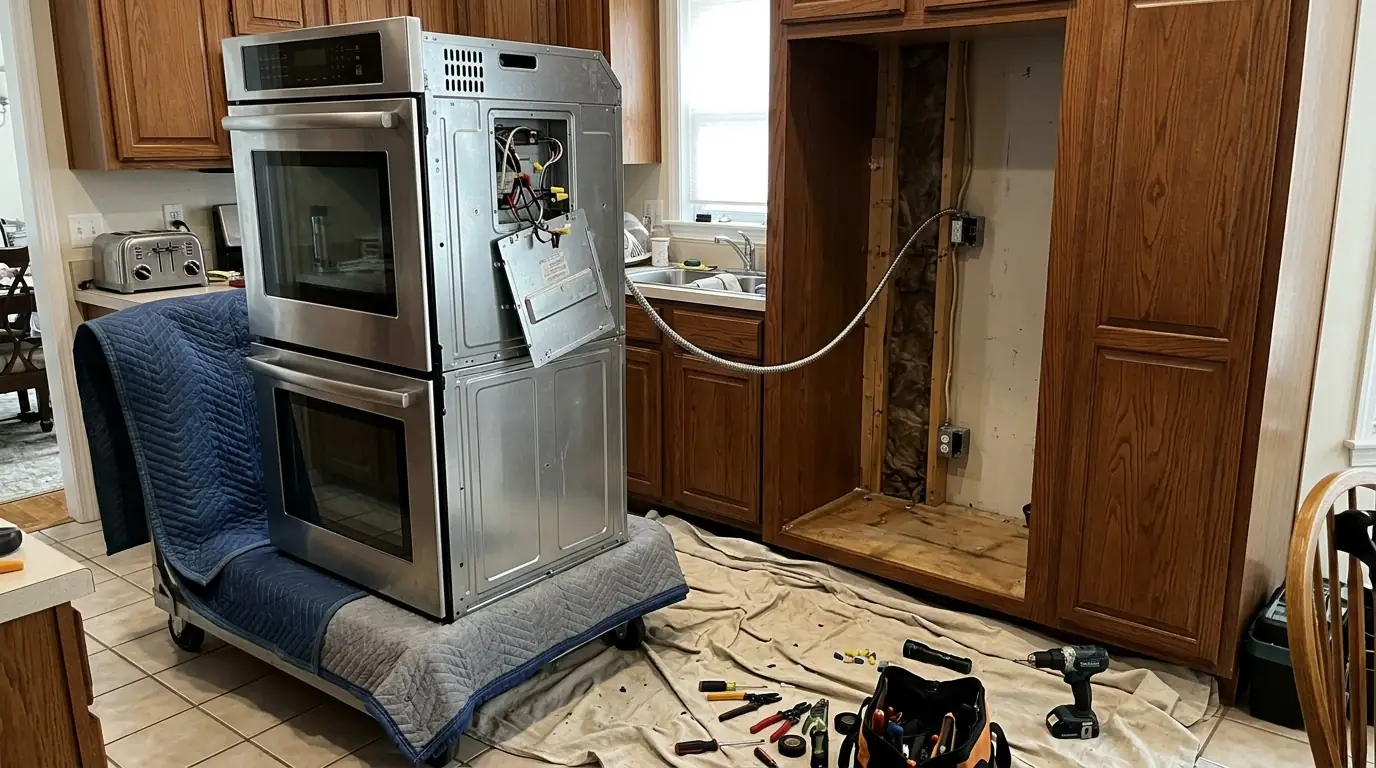
Wall ovens hide most of their parts behind the cabinet face, so many repairs mean sliding the oven out on a platform, supporting its weight and working from the side or back. Double wall ovens are heavier still. Common faults are the cooling fan that keeps the electronics alive, the control board above the door, door hinges that sag, and the same elements and sensors as any electric oven. We plan the pull-out carefully so the cabinet trim isn't scratched.
Self-Clean and Door Lock Faults
The self-clean cycle runs the cavity far hotter than normal cooking, which is why it is the moment many ovens fail. A door that stays locked after the cycle has ended, a lock error code, or an oven that is dead after self-clean usually points to the lock motor and switch assembly, a blown thermal fuse or a control that overheated. We test the lock motor and switches, check the thermal fuse and replace what failed. Don't pry a locked door.
Any hour
Oven Repair problem right now?
Call and tell us what the appliance is doing. Phones are answered day and night, and we will get a technician scheduled.
Step by step
How We Diagnose an Oven That Won't Bake Right
Reproduce the problem
We set a bake temperature and watch what happens: igniter glow, element color, heating speed and any error code on the display.
Measure, don't guess
Igniter current, element and sensor resistance, and voltage at the control board each get checked against the specifications for your model.
Check for gas leaks
On gas ovens we brush leak solution on the connector and valve fittings before and after any work near the gas train.
Repair and verify temperature
After replacing the part, we let the oven cycle with a thermometer on the center rack to confirm it reaches and holds temperature.
Local conditions
Why This Repair Looks Different in South Bend
Whirlpool Corporation's global headquarters sits in Benton Harbor, up in Berrien County, and the company markets KitchenAid, JennAir, Maytag and Amana alongside its own name. We work on ovens from every brand, and those names come up often on repair calls. They share many parts and diagnostic modes across lines, which helps us read a control's fault codes and look up the right sensor or igniter quickly.
Before you call
Oven Checks You Can Make, and Gas Work to Leave Alone
Safe to check yourself
- Check the breaker; an electric oven runs on a double breaker that can half-trip.
- Make sure the control isn't in a lockout or Sabbath mode.
- Put an oven thermometer on the center rack to see how far off the temperature really is.
- Look at the bake element for blisters, splits or burn marks.
Leave these to a technician
- Anything on the gas valve, igniter, burner or connector, which needs leak testing after the work.
- Element replacement where the terminal wires look burned or brittle.
- A door stuck locked after self-clean; prying it can break the latch and hinge.
- Removing an oven door with spring-loaded hinges, which can snap shut on fingers.
Cost factors
What an Oven Repair Costs, and Why It Varies
National planning ranges reported by This Old House put oven repair at $100 to $400, average about $300; the Inch Calculator appliance repair cost guide lists built-in oven repair at $100 to $600. Neither is our price. The failed part and the oven's design set the real figure.
Dollar figures are typical national planning ranges reported by This Old House appliance repair cost guide and Inch Calculator appliance repair cost guide. They are not a quote and not our price; your cost depends on the diagnosis.
Part type
A bake element or temperature sensor is a modest part. A gas safety valve, door lock assembly or main control board costs considerably more.
Freestanding or wall oven
A freestanding range slides out from the wall. A wall oven has to come out of its cabinet, which takes more time and care.
Gas or electric
Gas ignition work includes leak testing at the valve and connector. Electric work focuses on elements, terminals and 240-volt wiring.
Collateral heat damage
A failed element can burn terminal wiring, and a failed self-clean can cook a control board, which adds parts to the repair.
Brands we repair
- Whirlpool
- Maytag
- KitchenAid
- GE
- Frigidaire
- Samsung
- LG
- Bosch
- Electrolux
- Amana
- JennAir
- Sub-Zero
- Wolf
- Speed Queen
FAQ
Oven Repair Questions From South Bend Homeowners
The igniter has weakened. It still glows, but it no longer draws enough current to open the oven's safety valve, so no gas flows. This is the most common gas oven failure. We confirm it with a clamp meter reading on the igniter circuit and replace the igniter, then watch the burner light.
Look for a split, blister or burned spot on the element, and check whether it glows red when the oven is set to bake. If it stays dark while the broil element works, the bake element or its wiring has failed. We confirm with a resistance test before replacing it.
Self-clean pushes the oven much hotter than normal baking, and that heat stresses the door lock, thermal fuse and control board. Ovens that fail during self-clean are a regular repair for us. If your oven is older, consider cleaning by hand, and never start a self-clean right before a holiday meal.
Some repairs, like elements, the temperature sensor and some door parts, are done from inside the cavity. Control boards, cooling fans and wiring often need the oven slid out of the cabinet onto a support. We judge which repair needs what before we start and protect the cabinet trim during removal.
Often a setting. Many ovens let you offset the temperature through the control's calibration menu. If the error is larger, changes over time, or the oven overshoots badly, the temperature sensor, igniter or element is likely failing. We test the sensor's resistance first.
Related repairs
More Ovens, Ranges & Cooktops Repairs We Handle
From our appliance tips: Gas Oven Not Heating? Why the Igniter Is Usually the First Suspect and Appliance Repair Costs in South Bend: Ranges and What Moves the Bill.
Phones answered 24/7
Oven Cold Before Dinner?
If you smell gas, leave and call the utility first. Otherwise, note any error code and give us a call. We answer 24/7 and can walk you through what to check.