Dishwashers, Disposals & Water
Kitchen Trash Compactor Repair Serving South Bend
A compactor that hums without pressing, a drawer stuck halfway or a unit that will not start usually has one fault: a stripped power nut, a slipped chain, a failed switch or a bent track.
- Calls answered 24/7
- Undercounter and freestanding
- Drive, drawer and switch faults
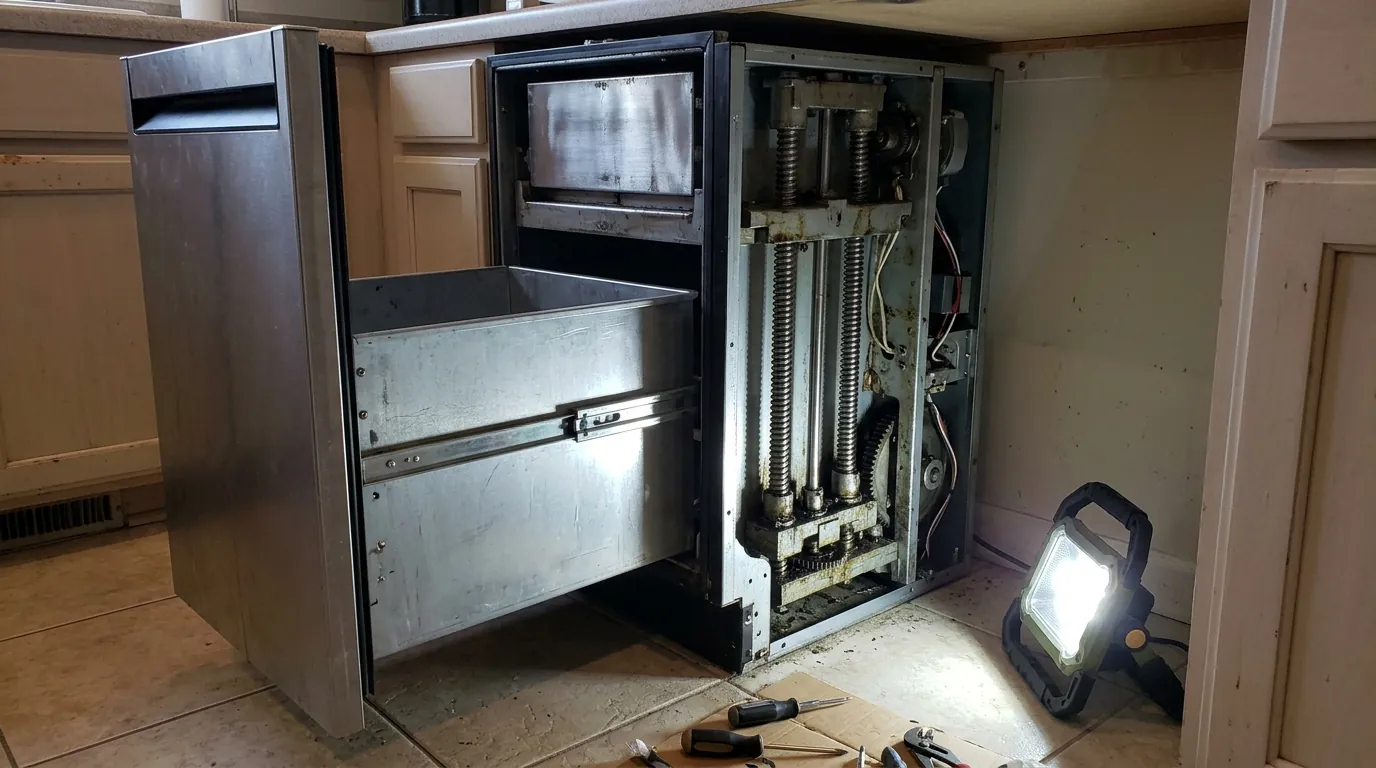
Trash compactor repair in South Bend usually means a ram that will not move, a stuck drawer, or a unit that will not start. Worn power nuts, a loose drive chain or belt, failed safety switches or a bent drawer track cause most of them.
The problem
Trash Compactor Repair in South Bend: What Usually Goes Wrong
A compactor drives a steel ram down with two threaded power screws, turned by a motor through a chain or belt. Limit switches stop the ram at the top and bottom, while a drawer switch and a key or safety switch stop it from running with the drawer open. A centrifugal switch on the motor helps it start under load.
Because the machine is simple, its failures follow patterns. A motor that runs while the ram stays still points to the drive. A unit that does nothing points to the switches. A drawer that binds points to the track or a bag caught in the mechanism. We test each part rather than replacing assemblies.
Cost factors
What Compactor Repair Costs Depend On
Our cost sources list no national range for trash compactor repair, so here are the factors instead.
Drive or switch
A failed switch is usually a smaller job than replacing stripped power nuts or screws, which requires lifting the ram out of the cabinet.
Undercounter access
Built-in compactors may need to slide out of their opening for drive repairs, which adds time compared with a freestanding unit.
Part availability
Parts for older or discontinued compactors can be harder to find, and that can change the repair-or-replace answer before work starts.
Track and drawer damage
A bent track or cracked drawer front may need replacement parts beyond the original fault, especially after a drawer was forced open.
Compactor Ram Not Moving
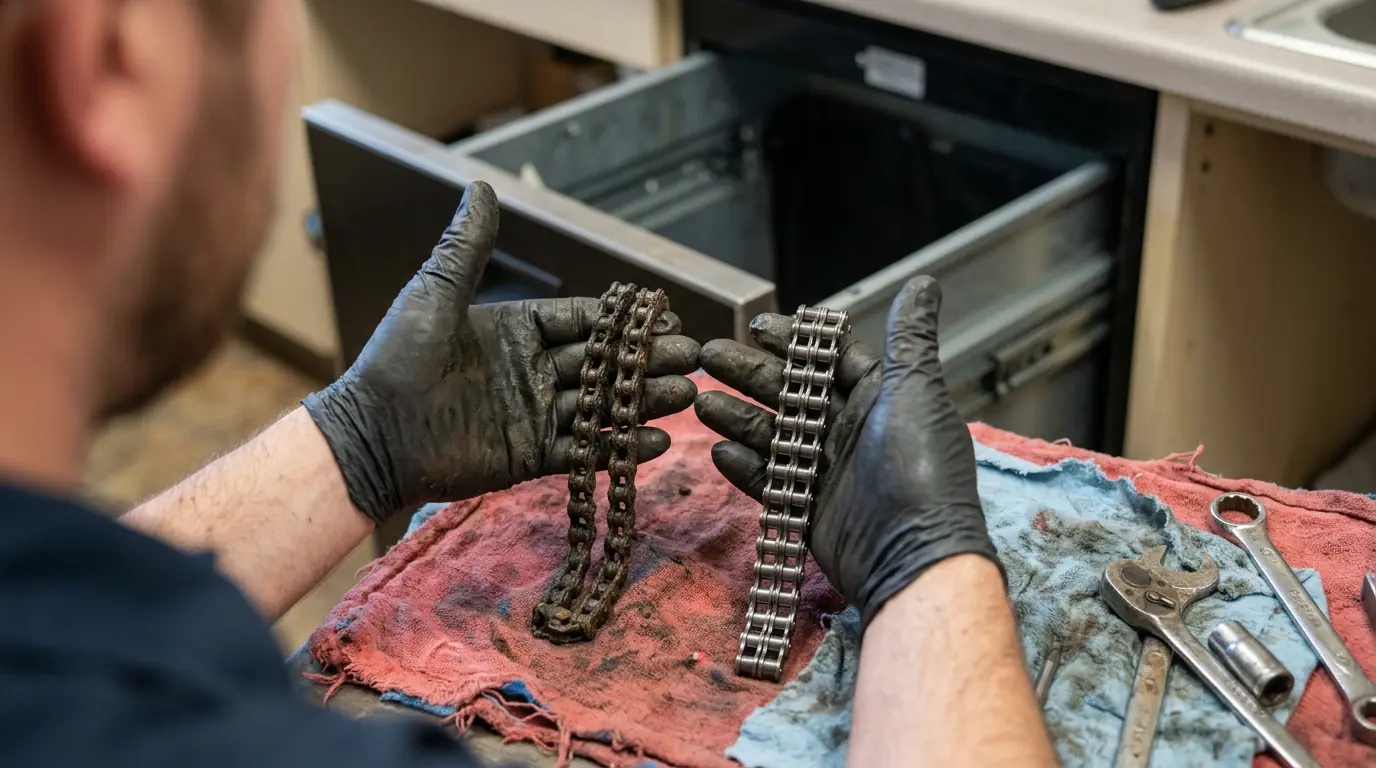
If you hear the motor but the ram stays put, the drive has slipped. The chain may have jumped its sprockets, the belt may be worn or loose, or the power nuts on the ram may have stripped their threads after long service under heavy loads. If the ram moves partway and stops, a limit switch or a load that is too dense may be the cause. We remove the cabinet panel, inspect the power screws, nuts and chain, and replace the worn part.
Drawer Stuck or Off Its Track
A drawer that will not open usually has the ram stopped low, a bag snagged in the mechanism, or a track bent from overloading or a hard close. Drawers that sag or rub have worn rollers or loose track screws. We release the ram first if it is down, clear any bag or debris, then straighten or replace the track and rollers. Never pry a stuck drawer: the ram can hold it with real force. We also check the drawer front for cracks.
Switches and Safety Interlocks
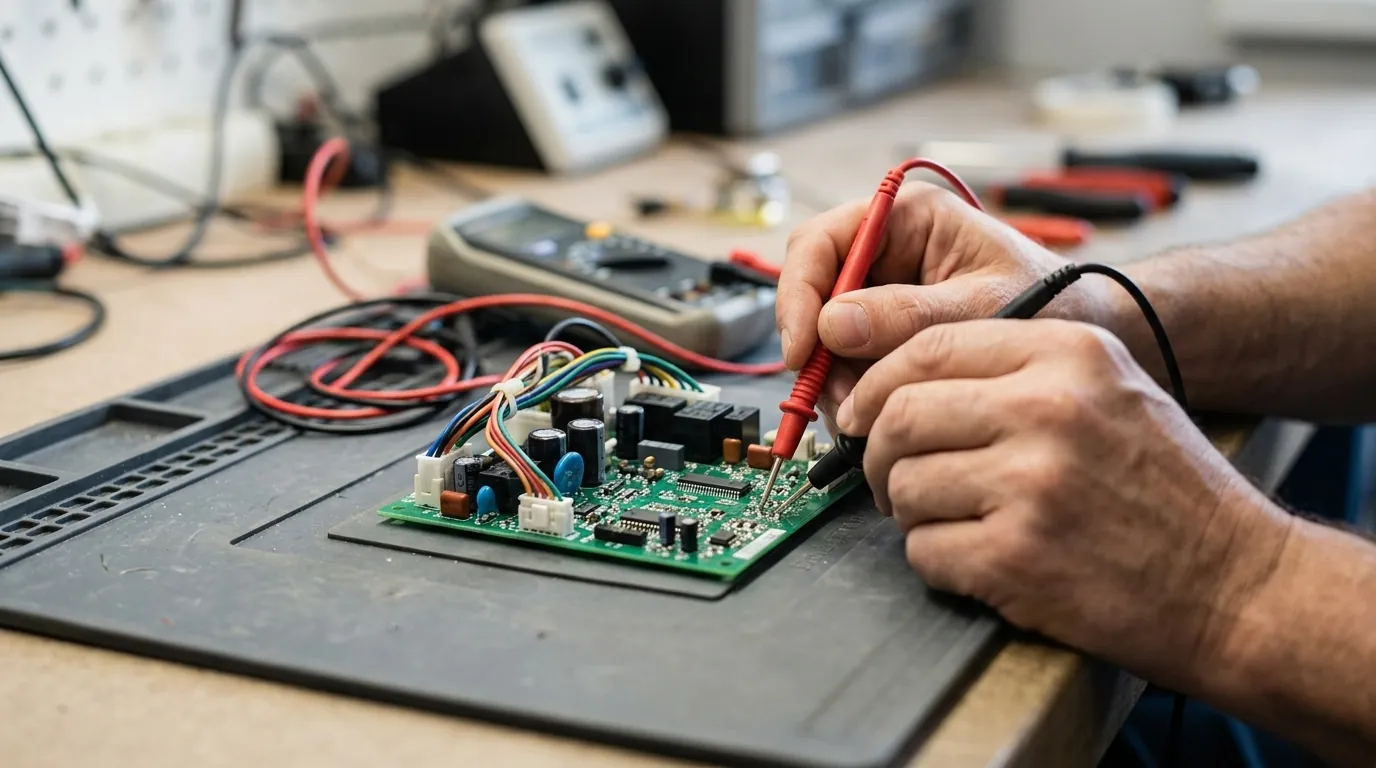
Compactors are built to refuse to run unless every safety condition is met. The drawer switch confirms the drawer is shut, the key switch confirms it is enabled, and the top and bottom limit switches set the ram's travel. Any of them can fail, and a single bad switch makes the whole unit look dead. We meter each switch, check the wiring harness for damage and replace only the failed switch. A loose connector is sometimes the whole fault. Wiring gets checked too.
Odor and Cleaning Problems
Strong odors usually come from liquid that has leaked past the bag and dried in the drawer, under the bag caddy or on the ram face. Some compactors have an odor-control fan or a deodorizer compartment that can fail or need a fresh cartridge. We remove the caddy, clean the drawer and ram, check the fan and the bag fit, and explain which items cause leaks so the smell does not return. Most odor calls need cleaning, not parts. Wrapping wet waste helps.
Any hour
Trash Compactor Repair problem right now?
Call and tell us what the appliance is doing. Phones are answered day and night, and we will get a technician scheduled.
Before you call
Compactor Checks You Can Make
Safe to check yourself
- Confirm the key switch is turned on and the drawer is fully closed.
- Check the breaker or outlet that feeds the compactor.
- Use the correct bag size so it does not snag the mechanism.
Leave these to a technician
- Prying open a drawer held shut by the ram.
- Removing the cabinet panel to reach the drive chain and power screws.
- Testing switches with the unit plugged in.
Local conditions
Why This Repair Looks Different in South Bend
Mishawaka's median home was built in 1975 and Granger's in 1986, an era when undercounter trash compactors were a common kitchen option. Many we see in those homes are original or early replacements, so parts supply is the main question. Drive chains, power nuts and switches are often still available; some drawer parts are not. We check your model number first.
Step by step
How We Repair a Trash Compactor
Release and open safely
If the ram is down or the drawer is stuck, we disconnect power and release the mechanism before opening anything.
Inspect the drive
We check the chain or belt, the sprockets, both power screws and the power nuts for slipping, stretching or stripped threads.
Meter the switches
We test the drawer, key, limit and centrifugal switches and the wiring harness, since one bad switch stops the whole unit.
Repair and cycle it
After the repair we run several compaction cycles with a load in the drawer to confirm the ram travels fully and stops correctly.
Warning signs
Compactor Symptoms Worth a Call
Motor hums, ram does not move
A slipped chain, worn belt or stripped power nuts.
No response at all
A failed drawer, key or limit switch.
Drawer sticks halfway
A bent track, worn rollers or a snagged bag.
Grinding noise during compaction
Worn power screws or nuts.
Brands we repair
- Whirlpool
- Maytag
- KitchenAid
- GE
- Frigidaire
- Samsung
- LG
- Bosch
- Electrolux
- Amana
- JennAir
- Sub-Zero
- Wolf
- Speed Queen
FAQ
Trash Compactor Repair Questions From South Bend Homeowners
The drive has slipped. The chain may have jumped its sprockets, the belt may be worn or the power nuts on the ram may have stripped their threads. All are repairable. Stop running it, because a slipping drive can damage the power screws if the unit keeps trying.
Do not force it. If the ram is stuck down, the drawer is held by real force. Turn off power, check for a bag caught in the drawer edge, and try running a cycle to bring the ram up. If the ram will not lift, we release it and repair the cause.
Often, yes. Drive chains, power nuts, switches and drawer rollers are still available for many models. Some discontinued units have parts that are harder to source. We check availability for your model number before recommending the repair, so you know the answer up front.
Odor usually comes from liquid that has leaked under the caddy or onto the ram face and dried there. Remove the caddy, clean the drawer and ram, and check the odor fan or deodorizer if your model has one. Avoid compacting wet waste without wrapping it.
If the repair is a switch, chain, track or power nut on a solid cabinet, repair usually makes sense, especially since a built-in compactor fills a specific opening. If parts are unavailable or the cabinet and drawer are badly damaged, replacement or converting the space may be better.
Related repairs
More Dishwashers, Disposals & Water Repairs We Handle
Phones answered 24/7
Compactor Stuck? Give Us a Call
A stuck ram or dead compactor is usually one part away from working again. Give us a call any time with the model number and we'll check parts before we come out.