Washers & Dryers
Clearing Dryer Vents in South Bend Homes
If your dryer needs two cycles for one load, the laundry room gets humid, or the outside hood barely puffs, lint has likely narrowed the vent. We clear the duct end to end and fix the parts that keep it clogging.
- Calls answered 24/7
- Duct, hose and hood work
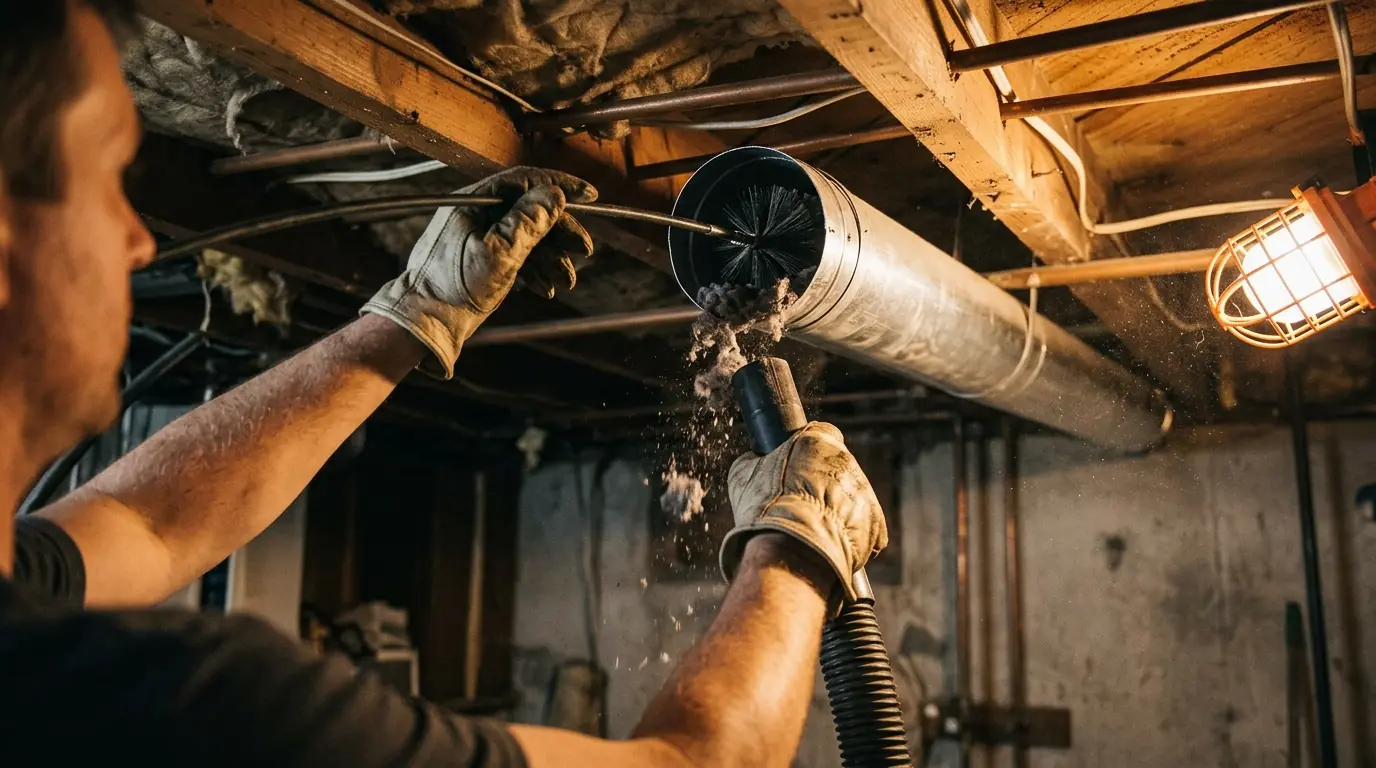
Dryer vent cleaning in South Bend clears the lint that builds up in the duct between your dryer and the outside wall, where it slows drying and creates a fire risk. We brush and vacuum the full run, replace crushed or plastic hoses, and repair hoods with stuck or broken flappers.
The problem
Dryer Vent Cleaning in South Bend: What Usually Goes Wrong
Your lint screen catches most lint, not all of it. The rest coats the transition hose behind the dryer, collects at every elbow and packs into the outside hood, where cold air makes moist lint cling. Over time airflow drops, the dryer runs longer and hotter, and safety fuses start to blow. A clean vent dries loads faster and puts less wear on the heating parts.
We work from both ends: the dryer is pulled out and disconnected, a rotary brush runs through the duct, and a vacuum captures what comes loose. Then we check airflow at the hood with the dryer running. If a section is crushed, disconnected or the wrong material, we tell you and replace it.
Scope of the job
What Our Dryer Vent Cleaning Includes
- Airflow check at the exterior hood before and after
- Moving and disconnecting the dryer, then reconnecting it
- Rotary brushing and vacuuming of the full duct run
- Cleaning the lint screen housing inside the dryer
- Clearing the exterior hood and its damper flap
- Inspection of every joint for gaps, screws and sags
- Transition hose replacement when it is crushed, vinyl or torn
- A plain report of anything that needs rerouting
Lint-Clogged Duct Runs
Lint builds fastest at elbows, at low spots where moisture condenses, and where duct sections were joined with screws that poke into the airflow and snag lint. We run a rotary brush through the rigid duct from the dryer end and the hood end, vacuum what comes loose, and pull out any clumps caught at joints. Screws through the duct get replaced with foil tape so they stop catching lint. Where a joint has pulled apart inside a wall or ceiling, we reconnect it, since lint and moist air otherwise collect in the cavity.
Crushed Transition Hose Replacement
The short hose between the dryer and the wall is the most abused part of the vent. Pushing the dryer back flattens it, and old white vinyl or thin foil hose tears and sags. We replace it with semi-rigid aluminum or a rigid offset connector, sized to the space behind the dryer. A periscope connector lets the dryer sit closer to the wall without crushing anything. We also check that the wall collar is secure, because a loose collar leaks warm, damp air into the laundry room.
Exterior Vent Hood Repair
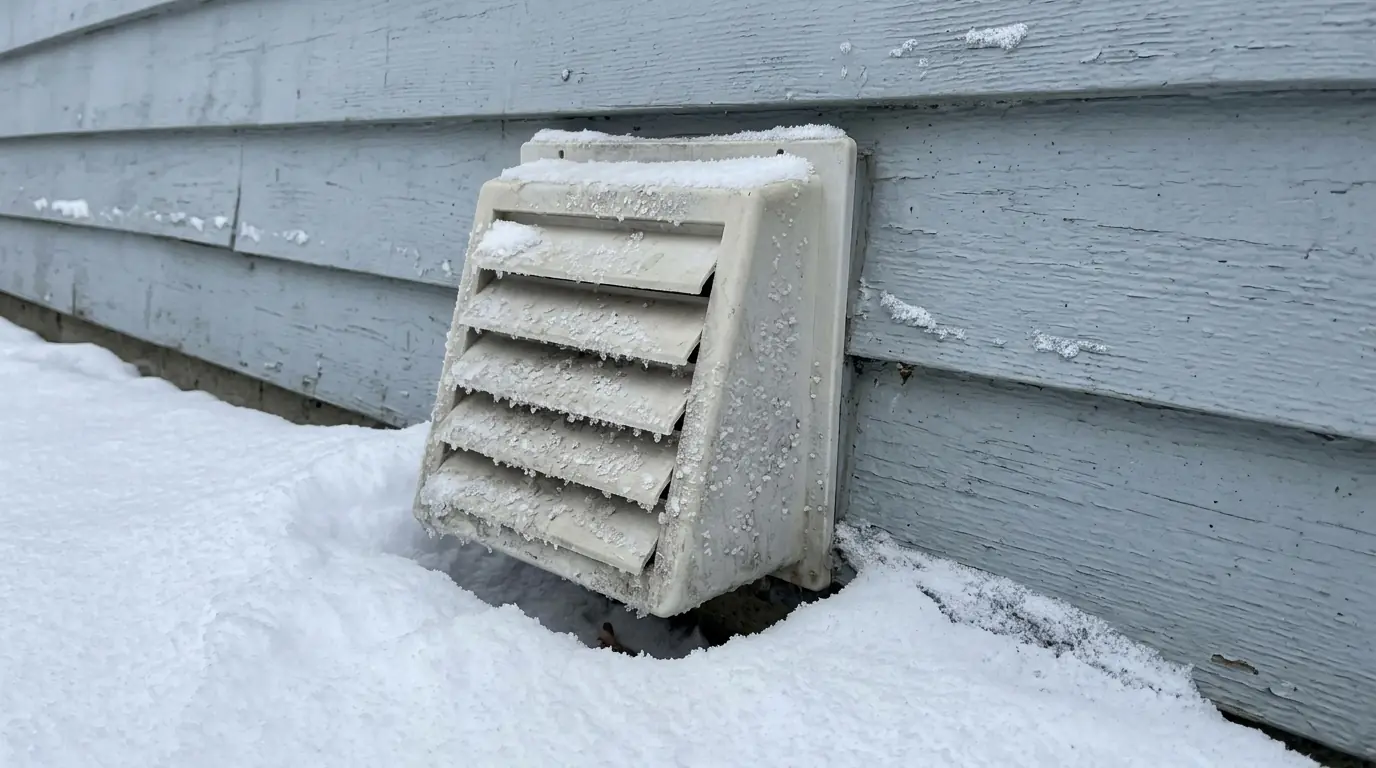
A hood with a stuck flapper, a bird screen packed with lint, or a cracked plastic body lets cold air and pests in and holds lint against the opening. We clear the hood, remove lint-catching screens that don't belong on a dryer exhaust, and replace broken hoods with a model whose damper opens freely. We also check that the hood sits high enough off the ground or deck to stay clear of snow, mulch and shrubs, and that the duct seals tightly where it passes through the wall.
Long or Rooftop Vent Runs
Laundry rooms in the middle of the house or on a second floor often vent through long runs or out the roof, where lint falls back down the duct and gathers at the bottom elbow. Rooftop caps can also clog with lint and get buried under snow. We clean these from both ends where it's safe to reach and tell you if the run is longer than the dryer can push through, which may call for a rerouted vent or a dryer booster fan.
Local conditions
Why This Repair Looks Different in South Bend
Two South Bend facts shape this job. The city's median home was built in 1955 and 28.3% of homes predate 1940, so many laundry areas were added long after the house was built, sometimes with long, improvised vent runs. And with 64.5 inches of snow a year, a low wall hood can sit under a drift for days. Moist lint freezes into the opening, and a hood that can't open turns every load into a long, hot cycle.
Any hour
Dryer Vent Cleaning problem right now?
Call and tell us what the appliance is doing. Phones are answered day and night, and we will get a technician scheduled.
Step by step
How We Clean a Dryer Vent End to End
Measure airflow first
With the dryer running on air fluff, we check airflow at the outside hood so we have a before reading to compare against.
Pull and disconnect
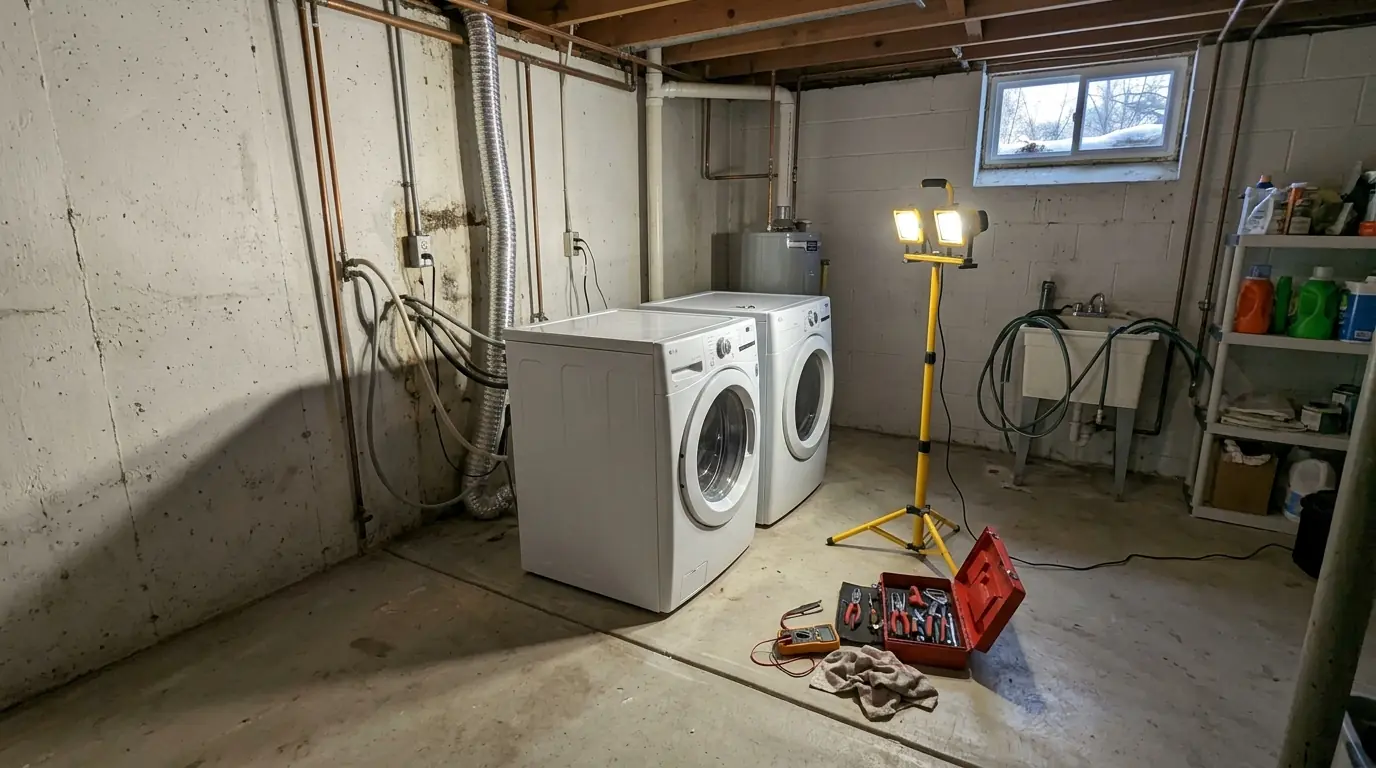
We move the dryer out, disconnect the transition hose, and inspect the wall collar and every visible section of duct.
Brush and vacuum
A rotary brush runs the length of the duct while a vacuum collects loosened lint, working from both ends where we can reach.
Fix the hood and hose
Flappers get cleared or the hood is replaced, and a crushed or vinyl transition hose is swapped for semi-rigid aluminum.
Reconnect and recheck
We reconnect with foil tape and clamps, push the dryer back without crushing the hose, and run it to confirm stronger airflow at the hood.
Cost factors
What Affects the Cost of Cleaning a Dryer Vent
Our cost sources don't list a national range for dryer vent cleaning, so here are the things that make one vent quicker or slower to clear than another.
Length of the run
A short straight run through the wall behind the dryer is quick. A long run through a basement ceiling or attic takes more brushing and more vacuum time.
Roof or high-wall termination
Rooftop caps and second-story hoods need safe ladder or roof access, and some can only be cleaned from the inside, which takes more passes.
Parts that need replacing
A crushed transition hose, a broken hood or a section that has pulled apart inside a ceiling adds parts and fitting time to the visit.
How long since the last cleaning
A heavily packed vent that has gone years without cleaning takes several brush passes and sometimes needs a section opened to remove compacted lint.
Warning signs
Signs Your Dryer Vent Is Clogged
Loads need two cycles
The most common sign. Heat is there, but damp air can't leave the drum fast enough.
Weak puff at the hood
With the dryer running, you should feel steady warm air outside. A faint puff means a blockage.
Laundry room gets hot and humid
Moist air leaking from joints or the transition hose shows up as condensation and heat.
Lint around the hood
Lint caught on the hood or siding outside means the vent is pushing it out slowly and catching the rest.
Burning or hot lint smell
Stop using the dryer. Lint near the heat source is a fire risk.
FAQ
Dryer Vent Cleaning Questions From South Bend Homeowners
Once a year is a sensible baseline, and sooner if loads start taking longer or you notice lint at the outside hood. Large families, pet hair and long vent runs fill a duct faster. Cleaning the lint screen every load and its housing every few months slows the buildup but doesn't replace a full duct cleaning.
We recommend replacing it. Vinyl and thin foil hoses crush easily, sag where lint collects, and can't take heat the way metal can. Semi-rigid aluminum or a rigid offset connector keeps its shape behind the dryer and is far easier to keep clean.
Dryer exhaust is warm and full of moisture. When it hits a hood sitting in subfreezing air or under a snowdrift, the moisture freezes on the flapper and lint sticks to the ice. With South Bend averaging 64.5 inches of snow a year, low hoods get buried often. Keep it clear after storms and consider a hood mounted higher.
Yes. Restricted airflow makes the dryer run longer and hotter, which blows thermal fuses, cycles the high-limit thermostat and shortens heating element and igniter life. Many of the no-heat dryers we repair have a clogged vent behind them, which is why we check the vent on every dryer call.
Where it can be reached safely, yes, from the roof cap and from inside. Some rooftop runs can only be brushed from the laundry room end. If the run is too long or has too many turns for the dryer to push through, we'll tell you so you can decide on rerouting.
Related repairs
More Washers & Dryers Repairs We Handle
From our appliance tips: Dryer Vent Warning Signs South Bend Homeowners Shouldn't Ignore and Turnover Appliance Checks for South Bend Rental Properties.
Phones answered 24/7
Loads Taking Forever to Dry?
Check the outside hood for snow or lint, then give us a call. We answer 24/7 and can clear the full vent run so your dryer works less.