Between tenants, South Bend landlords should check every appliance while the unit is empty: refrigerator temperatures, gaskets and coils; washer hoses and drain; dryer vent airflow; range burners, oven bake and anti-tip bracket; dishwasher filter and leaks. Fixing small faults during turnover costs less and disrupts no one, compared with an emergency call after move-in.
Why Turnover Is the Right Time for Appliance Work
About 39.8 percent of South Bend's roughly 41,282 households rent, so a lot of the city's refrigerators, ranges and washers sit in rental units that change hands regularly. The gap between leases is the one time you have full, uninterrupted access to every appliance with no one's groceries, laundry or schedule in the way.
It's also when problems are cheapest to fix. A torn door gasket or a dirty dryer vent found during turnover is a short visit. The same problem found by a new tenant in their first week becomes an urgent call, possibly spoiled food, and a rocky start to the lease.
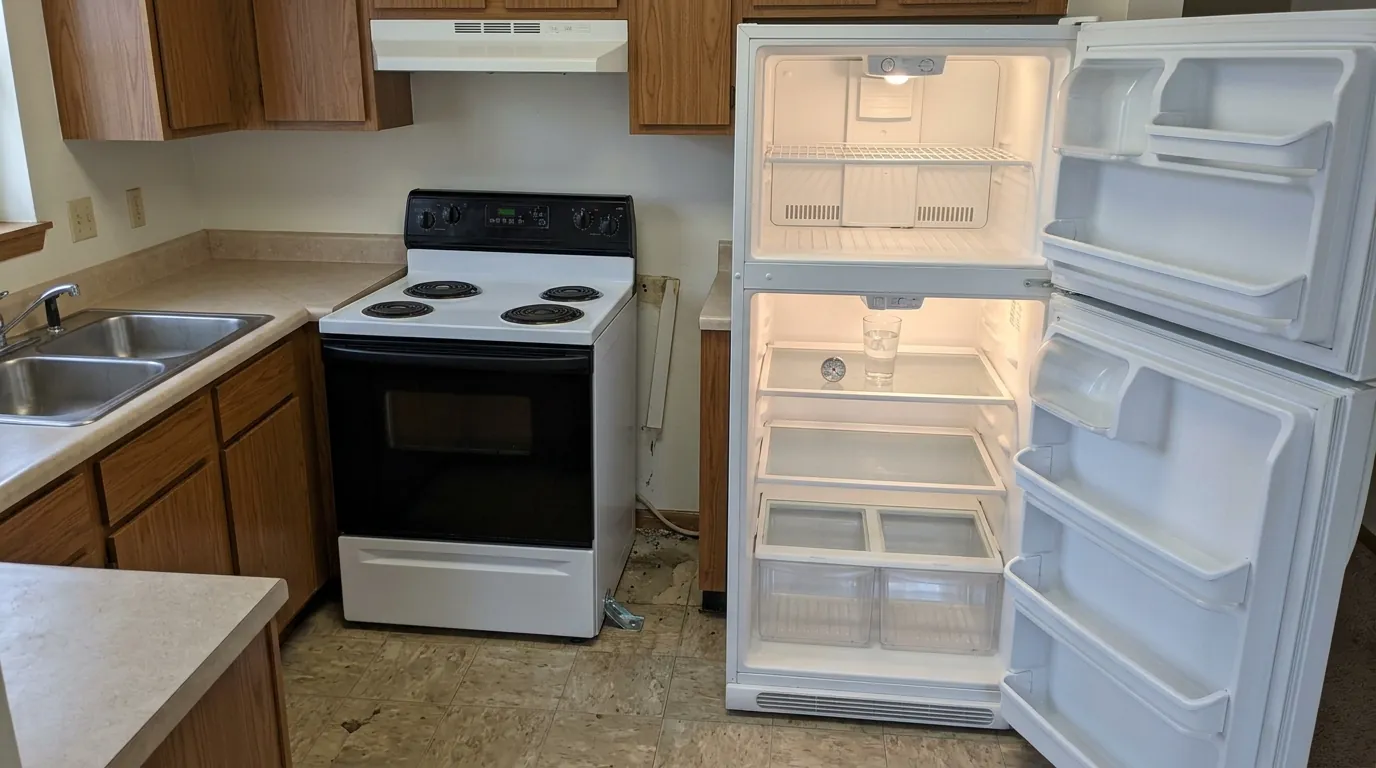
Refrigerator and Freezer Checklist
Refrigerators fail most expensively when no one notices a slow decline. With the unit empty, you can see and test everything.
- Put a thermometer in a glass of water on a middle shelf; the fridge should settle at or below 40F and the freezer near 0F
- Close each door on a dollar bill all the way around; replace gaskets that let it slide out easily
- Unplug and vacuum the condenser coils and clear the condenser fan
- Look for frost buildup on the freezer's back wall, a sign of a defrost problem
- Change the water filter and check the water line connection behind the unit for drips
- Clean and dry the interior, and prop the doors if the unit will sit unplugged
Washer and Dryer Checks That Prevent Floods and Fires
Laundry appliances cause the two kinds of damage landlords fear most. A burst washer hose can flood a unit and the one below it. A lint-packed dryer vent is a fire hazard. Both are quick to check while the unit is empty.
Look at the washer fill hoses for bulges, cracks or rust at the fittings, and replace rubber hoses that are old or show any wear with braided stainless ones. Clean the pump filter on front-loaders and run an empty cleaning cycle. For the dryer, clean the lint screen housing, check the transition duct behind it for crushing, and confirm strong airflow at the outside hood. If drying times were a tenant complaint, have the full vent run cleaned.
Call us during your next turnover and we'll get a technician out to check every appliance in the unit while it's empty.
Range, Oven and Cooktop Safety
Cooking appliances get the hardest use in rentals. On gas ranges, light every burner and confirm a steady blue flame, then run the oven on bake and broil to make sure both light reliably. On electric ranges, test each element and look for cracks in glass tops.
Make sure the anti-tip bracket is installed and engaged. Range tip-overs are a known hazard, especially with children, and the bracket is a simple part that's often left off after a range is moved for cleaning. Check the oven door gasket and hinges, and if a gas range has to be pulled out, the connection should be leak tested when it goes back.
Dishwashers, Disposals and South Bend Hard Water
South Bend city water averages 19 to 24 grains per gallon, which is very hard. In a rental where nobody descaled the dishwasher or changed the fridge filter for a year or two, that shows up as film, clogged spray arms and slow-filling ice makers. Pull and clean the dishwasher filter, wipe the door gasket, run a descaling cycle, and look under the sink for drips at the supply and drain connections.
Run the disposal with water and listen for grinding or humming that suggests a jam, and check its bottom for leaks. A disposal that leaks from its body usually needs replacing rather than repair.
Repair or Replace Across a Rental Portfolio
Landlords face the repair-or-replace question more often than homeowners, and the math is a bit different. Downtime has a cost, and tenant satisfaction matters. When a unit has an older appliance with a failing major component, replacing during turnover often makes more sense than repairing now and replacing during an occupied lease later.
On the other hand, matching older cutouts and hookups matters in South Bend, where much of the rental stock is in older homes. A repair that keeps a correctly fitting range in place can beat a replacement that needs cabinet or gas line work. We'll give you the diagnosis and the honest options for each unit.
Make Service Calls Easier During a Lease
A few habits save time and money when something breaks mid-lease. Keep a simple record of each unit's appliance model and serial numbers, ages and past repairs. Give tenants clear instructions on who to call and what to do in the meantime, such as shutting the water valve behind a leaking washer. And tell your tenants that calls are answered around the clock, so a failure on a weekend doesn't wait until Monday.
Related repairs
Repairs This Guide Covers
FAQ
More Questions on This Topic
Test refrigerator and freezer temperatures, door gaskets and coils; inspect washer hoses and clean the pump filter; check dryer vent airflow at the outside hood; light every burner and run bake and broil on the range; confirm the anti-tip bracket; clean the dishwasher filter and check for leaks under the sink. Doing these while the unit is empty heads off most move-in breakdowns.
Many manufacturers recommend replacing rubber fill hoses every few years, or immediately if you see bulges, cracks or corrosion at the fittings. In rentals, where you can't watch the machine day to day, braided stainless hoses are a sensible upgrade. Turnover is the easiest time to swap them, since the washer can be pulled out and tested without disrupting anyone.
Not automatically. If it holds temperature, the gaskets seal, the coils are clean and there's no frost buildup, it can stay. But if it's showing warning signs like long run times, noise or frost on the back wall, replacing during turnover avoids an emergency during an occupied lease. A diagnostic check helps you decide unit by unit.
That's your decision as the landlord, so put it in writing for every tenant. Many landlords have tenants report to them first and then authorize a repair. Whatever your process, tell tenants the immediate safety steps, like shutting off the washer's water valves or unplugging a sparking appliance, and make sure the number they call is answered around the clock.
Yes. With city water averaging 19 to 24 grains per gallon, dishwashers in rentals often build scale when tenants skip rinse aid or never clean the filter. Cleaning the filter and running a descaling cycle at every turnover keeps spray arms and the heating element working. If the building has a softener, confirm it's regenerating and set correctly.