Washers & Dryers
South Bend Dryer Repair: No Heat, No Tumble, No Noise
A dryer that tumbles cold, won't turn, squeals or needs three cycles for one load wastes your evening and your power bill. We test the heating circuit and the drum drive and replace the part that actually failed.
- Calls answered 24/7
- Element and drum drive work
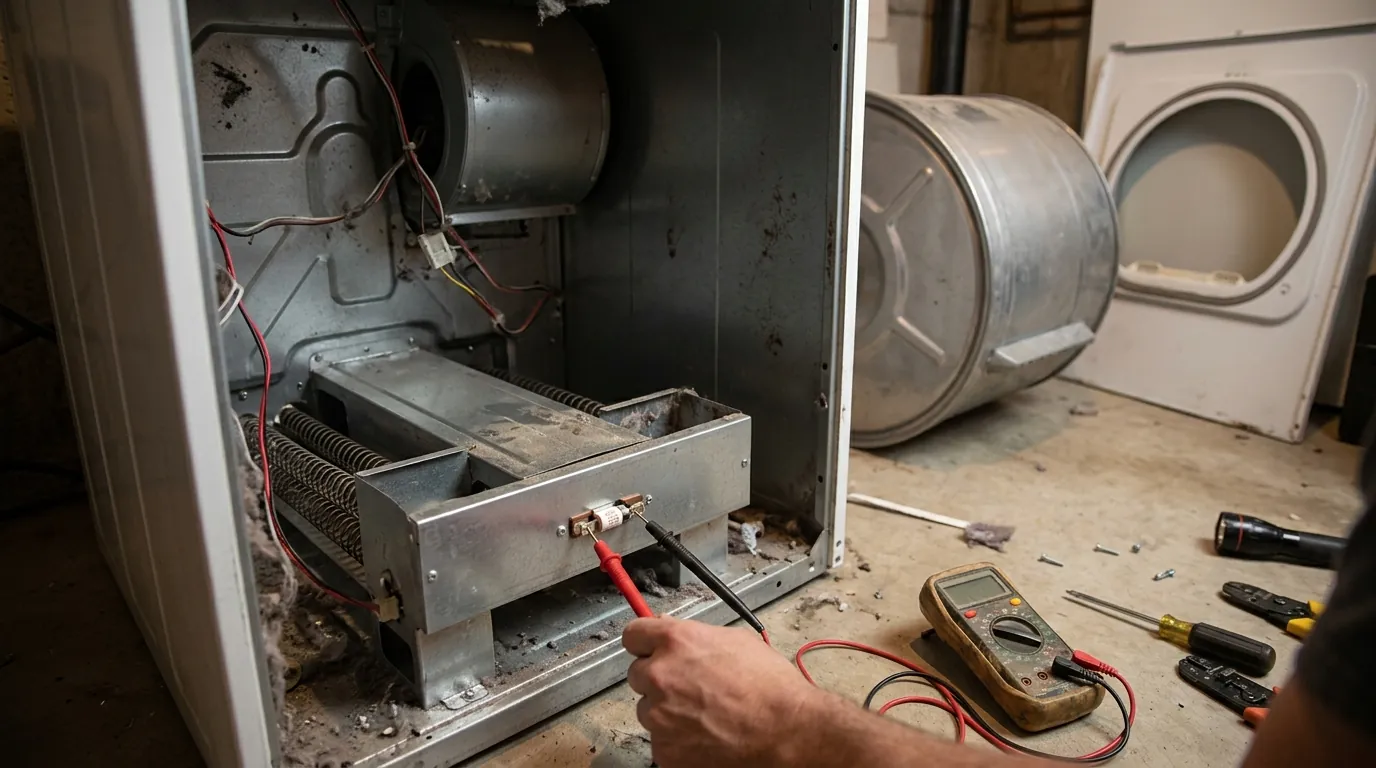
Electric dryer repair in South Bend usually traces to a blown thermal fuse, a broken heating element, a snapped drive belt or worn drum rollers. We check each with a meter or by hand, look at the exhaust path that often caused the failure, and fix both so it doesn't happen again.
The problem
Dryer Repair in South Bend: What Usually Goes Wrong
An electric dryer heats with a coiled element on a 240-volt circuit, protected by a thermal fuse, a high-limit thermostat and a cycling thermostat. The drum turns on a belt wrapped around a motor pulley, kept tight by a spring-loaded idler pulley, and rides on rollers or glides. Nearly every dryer complaint lives in one of those two systems.
Heat faults rarely happen alone. A fuse blows because the exhaust is choked with lint, so we check airflow before closing the cabinet. Gas dryers share the drum drive described here; their burner, igniter and valve coils get their own page. We service Whirlpool, Maytag, GE, Kenmore, Samsung, LG and Electrolux.
Warning signs
Dryer Symptoms That Shouldn't Wait
Hot or scorched smell
Lint touching the element or a failing motor can scorch. Shut the dryer off and leave it off until it is checked.
Cabinet too hot to touch
A top or side panel that is unusually hot means air isn't leaving the dryer and safety parts are being pushed.
Clothes come out hot but damp
Heat is present but moisture can't escape, which points to the vent rather than the element.
Squeal at startup
A dry idler bearing gets worse fast and can seize, snapping the belt.
Repeated thermal fuse failures
A second blown fuse is a warning that the exhaust is restricted, not a parts problem.
Electric Dryer Not Heating
The drum turns but the clothes stay cold. We start with the thermal fuse, a one-time safety part that opens when exhaust temperature runs too high; a blown fuse almost always means a restricted vent. Next is the heating element, checked for an open coil or a coil shorted to its housing. Then the high-limit and cycling thermostats, and finally whether both legs of 240 volts reach the dryer. A tripped breaker on one leg can leave the drum turning with no heat.
Dryer Not Tumbling
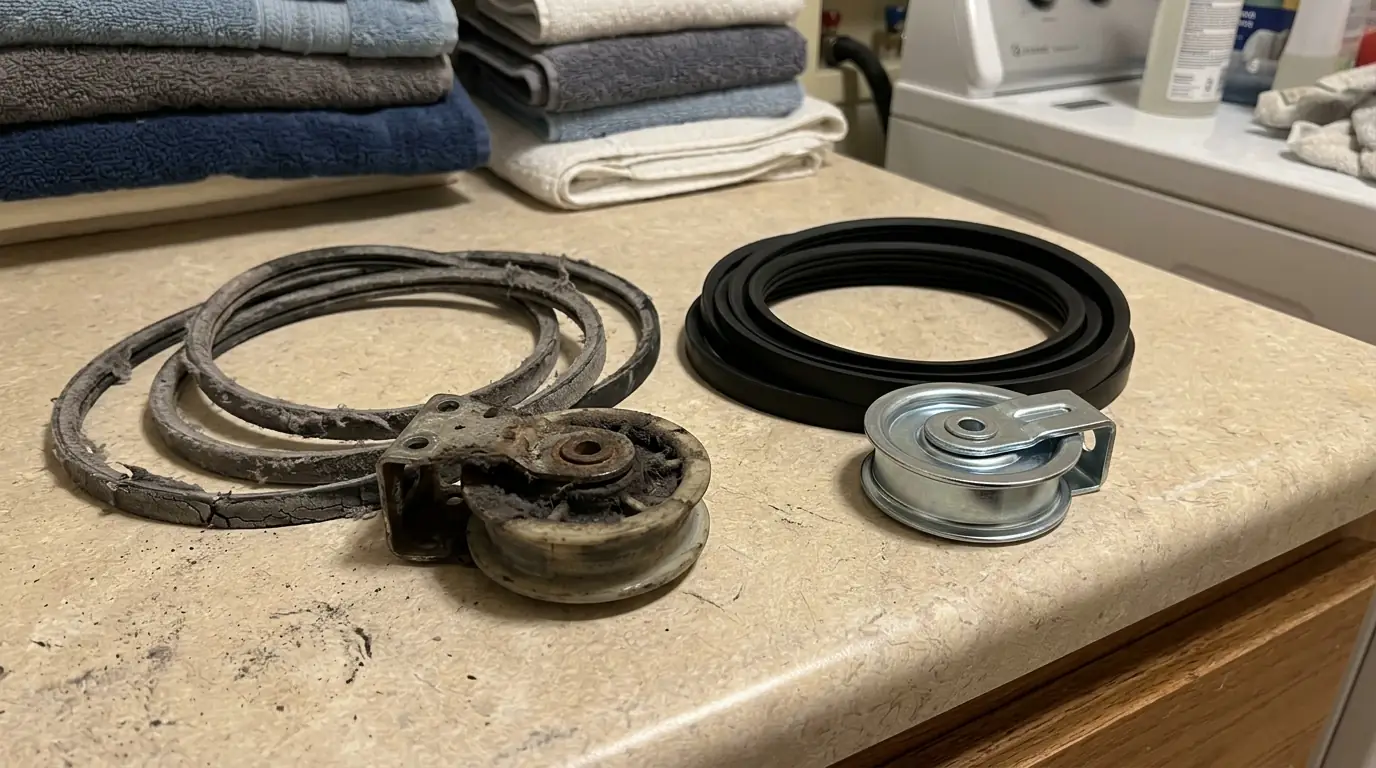
You hear the motor hum or run, but the drum stays still. A broken belt is the usual cause, and some dryers stop the motor when the belt switch senses it. A seized idler pulley or a frozen drum roller can stall a weaker motor. A motor that only hums, with the drum free to turn by hand, may have a failed start switch or a bad motor. We remove the front or top, inspect the belt and pulley, and test the motor windings.
Squealing and Thumping Dryer Noises
A high squeal that rises as the dryer warms up is usually a dry idler pulley bearing. A rhythmic thump points to flat spots on the drum rollers or a belt with a lumpy section. Scraping comes from worn drum glides or a felt seal that has pulled loose. These parts wear together, so we replace rollers, idler and belt as a set when the dryer is already apart. A coin or bra underwire caught in the drum seam can sound alarming but is a quick fix.
Long Dry Times
Loads that need two cycles usually mean airflow, not heat. A full lint screen housing, a crushed transition hose or a vent clogged near the outside hood leaves hot, wet air with nowhere to go. We measure temperature at the drum outlet and check airflow at the exhaust. If air moves well, we look at a cycling thermostat that opens too early, a moisture sensor coated with fabric softener film, or a heating element with a broken section. Overloading the drum with heavy bedding also slows drying on any dryer.
Any hour
Dryer Repair problem right now?
Call and tell us what the appliance is doing. Phones are answered day and night, and we will get a technician scheduled.
Step by step
What Happens When We Open Your Dryer
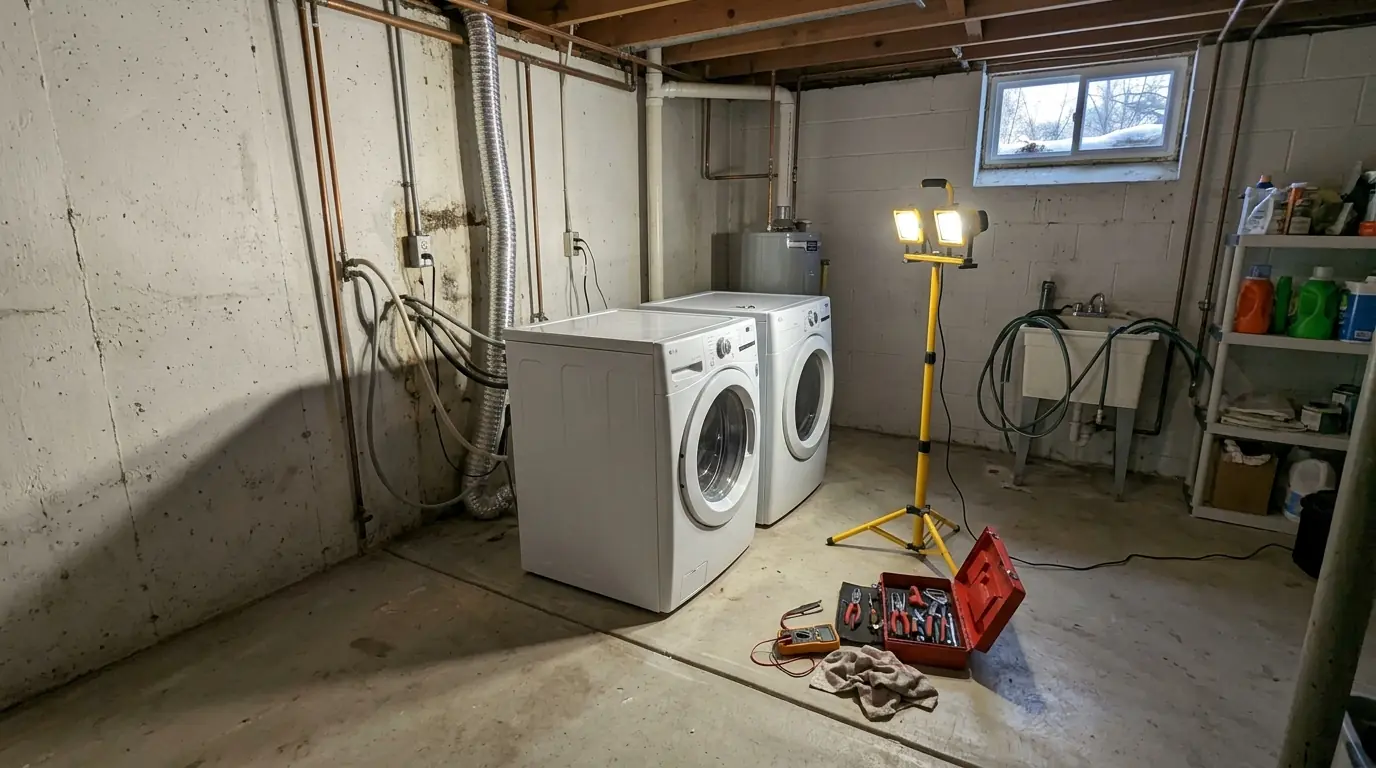
Disconnect and check power
We unplug the dryer, then confirm the outlet delivers 240 volts on both legs so we don't chase a breaker problem inside the cabinet.
Test the heat circuit
The thermal fuse, high-limit thermostat, cycling thermostat and heating element each get an ohmmeter reading, in that order, with the dryer unplugged.
Inspect the drum drive
With the drum out, we spin the rollers and idler by hand and check the belt and glides for wear.
Check the exhaust
We look at the transition hose and feel airflow at the outside hood, because a restricted vent caused many of the failures we fix.
Reassemble and verify heat
We run a timed cycle on heat, check the exhaust temperature at the outlet and listen for roller or idler noise before we leave.
Local conditions
Why This Repair Looks Different in South Bend
South Bend averages 64.5 inches of snow a year, and lake-effect storms come in on a cold northwest wind off Lake Michigan. Snow and ice can pile up around a low exterior dryer hood or freeze its flapper shut, and a dryer pushing against a blocked hood runs hot and slow. That is a common reason we find blown thermal fuses here after a heavy storm. Clearing the hood after snowfall is one of the easiest ways to protect the element.
Before you call
Dryer Checks You Can Do Before You Call
Safe to check yourself
- Clean the lint screen and vacuum the screen housing with a crevice tool.
- Check the breaker panel: an electric dryer uses a double breaker, and one half can trip.
- Look at the outside hood and clear snow, ice or a stuck flapper.
- Straighten a kinked foil or vinyl hose behind the dryer, then plan to replace it.
Leave these to a technician
- Testing the element, thermostats or fuse, which means working near 240-volt terminals.
- Jumping a blown thermal fuse to get heat back: never do this, it removes a fire safety cutoff.
- Drum removal for rollers, belt and idler replacement.
- Any dryer that smells of burning or has scorch marks inside the cabinet.
Cost factors
Electric Dryer Repair Costs and What Drives Them
As national planning ranges, the Inch Calculator appliance repair cost guide reports electric dryer repair at $150 to $400, and This Old House lists washer or dryer repair at $100 to $650, average about $300. These are not our prices; the failed part decides the real cost.
Dollar figures are typical national planning ranges reported by Inch Calculator appliance repair cost guide and This Old House appliance repair cost guide. They are not a quote and not our price; your cost depends on the diagnosis.
Heat part versus drive part
A thermal fuse or belt is an inexpensive part. A heating element or a drive motor costs more, and a main control board sits at the top of the range.
Root-cause fixes
When a lint-choked vent blew the fuse, the repair is only complete if the exhaust gets cleared too, which adds time.
Front or top access
Some dryers open quickly from the front. Others need the top raised and the drum lifted out to reach the element.
Wear parts replaced together
Rollers, idler pulley and belt wear as a group. Replacing them at once costs more today but avoids a second teardown.
Brands we repair
- Whirlpool
- Maytag
- KitchenAid
- GE
- Frigidaire
- Samsung
- LG
- Bosch
- Electrolux
- Amana
- JennAir
- Sub-Zero
- Wolf
- Speed Queen
FAQ
Dryer Repair Questions From South Bend Homeowners
Because exhaust air is running too hot, and the usual reason is a restricted vent: lint in the duct, a crushed hose behind the dryer, or a blocked outside hood. A failing cycling thermostat can do it too. Replacing the fuse without fixing the airflow means it blows again. We check both before reassembling.
Yes. An electric dryer runs its motor on one 120-volt leg and its element across both legs, so if half of the double breaker trips, the drum can turn while the element stays cold. Reset the breaker fully off, then on. If it trips again, there is a short, and the dryer needs testing.
Usually the idler pulley bearing or a drum roller that has lost its lubrication. It squeals cold and may quiet as it warms, but it gets worse and can seize, which can snap the belt. We replace rollers, idler and belt together when they show wear.
It can. Drifting snow and freezing rain can bury a low wall hood or freeze its flapper shut, especially on the side of a house facing the wind off Lake Michigan. A dryer pushing against that runs hot and slow and can trip its safety fuse. Clear the hood after storms.
Only by testing. An element with a broken coil reads open on a meter, and sometimes you can see the break. A thermostat can test fine cold yet open early when warm, which shows up as long dry times. We test both, plus the thermal fuse, before ordering parts.
Related repairs
More Washers & Dryers Repairs We Handle
From our appliance tips: Dryer Vent Warning Signs South Bend Homeowners Shouldn't Ignore.
Phones answered 24/7
Dryer Cold, Quiet or Squealing?
Shut it off if you smell scorching, clean the lint screen, and give us a call. We answer 24/7 and will help you sort out the vent from the dryer itself.