Emergency, Commercial & Specialty
Commercial Ice Machine Repair in South Bend
An ice machine that slows down in summer, harvests thin or cloudy cubes, or stops altogether usually has scale, a dirty condenser, a weak pump or a failed sensor.
- Calls answered 24/7
- Modular and undercounter units
- Descaling and sanitizing
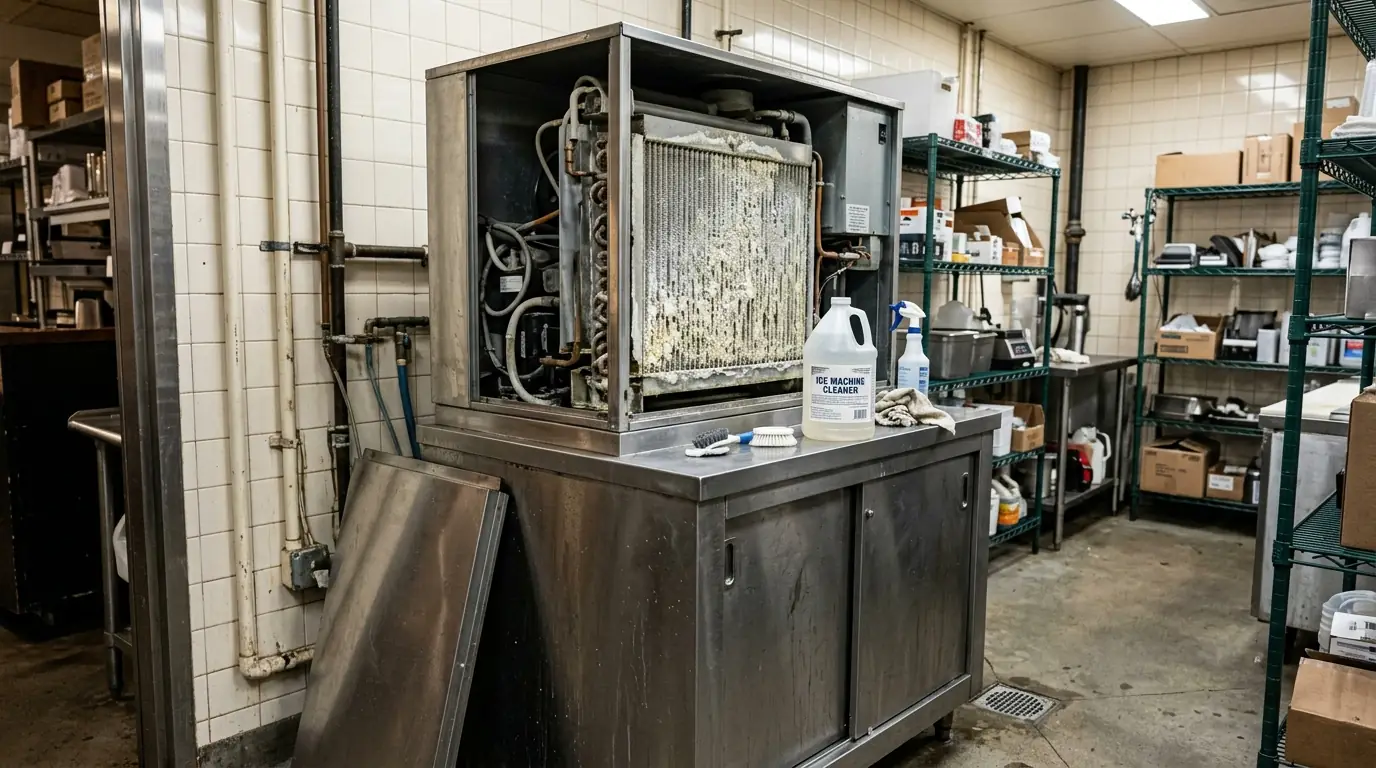
Ice machine repair in South Bend starts with checking the water supply, condenser and evaporator for scale and dirt, then testing the water pump, inlet valve, harvest controls and refrigeration system. We descale and sanitize where needed, replace failed parts and confirm a full freeze and harvest cycle.
The problem
Ice Machine Repair in South Bend: What Usually Goes Wrong
Ice machines combine refrigeration and plumbing, and they fail at both. Mineral scale coats the evaporator so ice won't release; condensers clog with kitchen dust and grease; pumps and inlet valves wear. Most problems give early warnings, such as smaller batches or longer freeze cycles, well before the machine stops completely.
We work on modular heads sitting on bins, self-contained undercounter units and residential-style undercounter ice makers. Tell us the brand and model from the data plate and what the machine is doing when you call. That points us toward scale, water, airflow or the refrigeration side before we even arrive.
Warning signs
Signs Your Ice Machine Needs Service
Smaller batches in hot weather
Often a dirty condenser or heavy scale.
Thin, hollow or cloudy cubes
Points to water flow, pump or filter problems.
Ice won't drop off the plate
Usually scale or a harvest control fault.
Slime or musty smell in the bin
Time for cleaning and sanitizing.
Water on the floor
Check the drain, pump and inlet fittings.
Commercial Ice Machine Not Making Ice
When a commercial machine stops producing, we start with the simple checks: water reaching the trough, power to the unit, and a bin control that isn't stuck signaling a full bin. Then we look at the condenser for dirt, the evaporator for heavy scale, and the water pump and inlet valve for flow. If those check out, we move to the refrigeration side, measuring temperatures and checking the harvest controls, before any part is replaced, so you don't pay for parts the machine didn't need.
Scale Cleaning and Sanitizing
Scale builds on the evaporator plate, the water distribution tube and the trough, slowing freezing and stopping clean harvests. We run the manufacturer's descaling cycle with an approved ice machine cleaner, then take apart and hand-clean the parts the cycle can't reach. A sanitizing pass follows to deal with slime and mold in the food zone. We reassemble everything, run a test batch and discard it before the bin goes back into service, then suggest a cleaning interval that suits your water.
Water Filter and Pump Faults
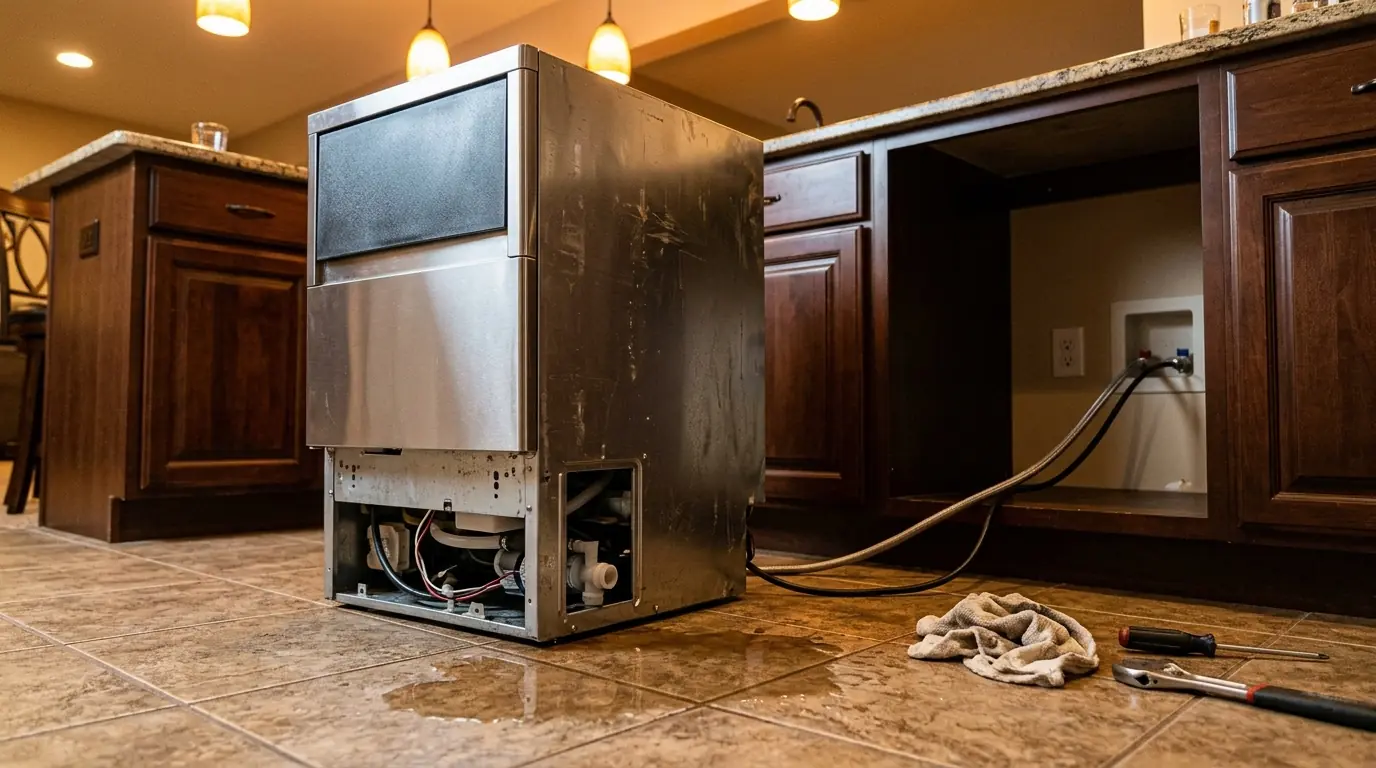
A clogged filter starves the machine of water, and the result looks like a refrigeration problem: thin ice, long cycles or a machine that stops on a fault. We check filter pressure and change dates, then test the water pump for flow and noise. Pumps wear out and seize with scale, and a weak pump leaves part of the evaporator dry, so cubes freeze unevenly. We replace failed pumps and set up filters to the manufacturer's spec for that machine.
Undercounter Ice Makers
Undercounter ice makers in homes, bars and break rooms are compact versions of the same system, often with a drain pump and a tighter airflow path. They suffer from blocked front grilles, drain pump failures, scale and leaks at the inlet. We check airflow at the grille, clean the condenser, test the drain pump and inlet valve, descale, and confirm the unit fills, freezes, harvests and drains on a full cycle. A blocked grille under a bar counter is one of the most common causes we find.
Any hour
Ice Machine Repair problem right now?
Call and tell us what the appliance is doing. Phones are answered day and night, and we will get a technician scheduled.
Step by step
How We Bring an Ice Machine Back
Check water and airflow
We confirm water supply, filter condition and pressure, and inspect the condenser and its fan for dirt, grease or blockage.
Inspect evaporator and pump
The evaporator, distribution tube and trough are checked for scale, and the water pump is tested for flow and noise.
Test controls and refrigeration
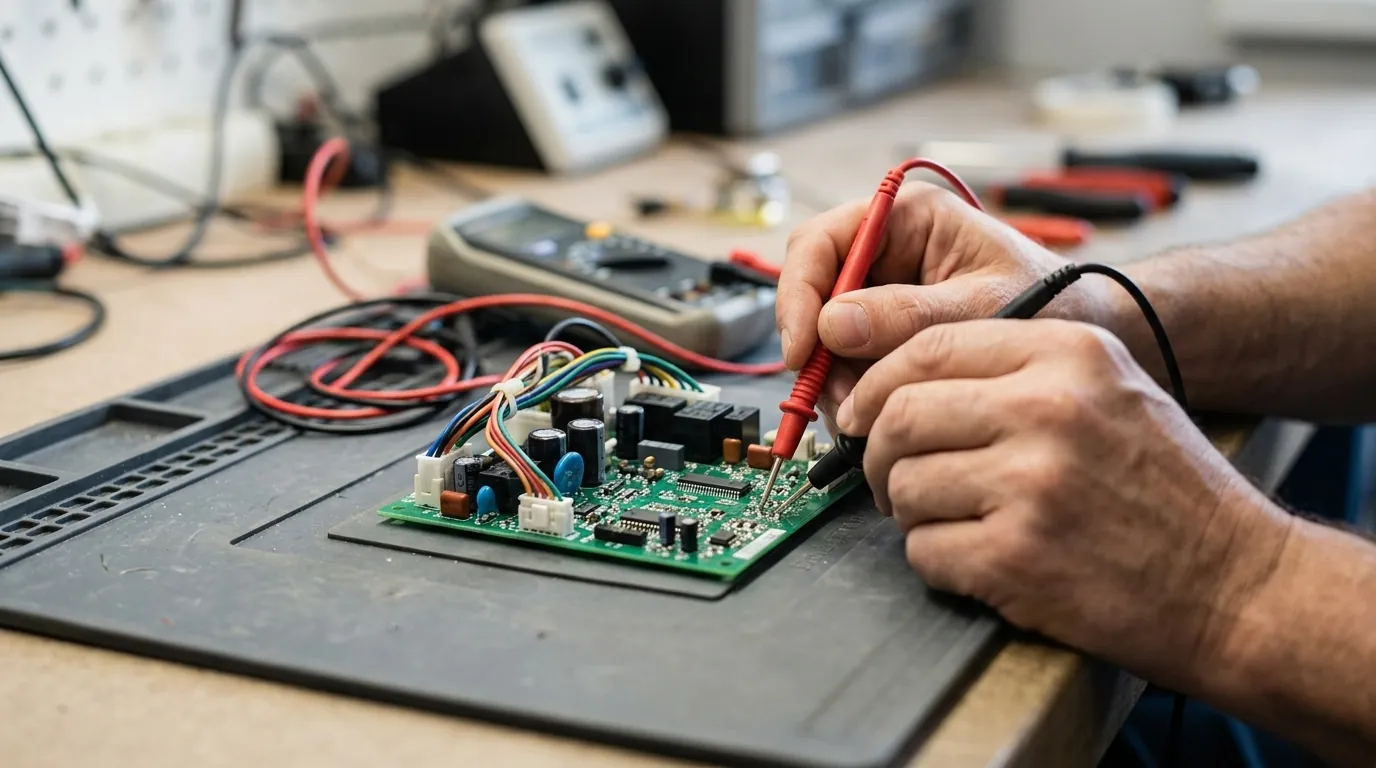
Bin controls, harvest sensors and inlet valves are tested, then the refrigeration side is checked with temperature readings at key points.
Clean, repair and run a cycle
We descale, sanitize, replace failed parts and watch a full freeze and harvest cycle, discarding the first batch of ice.
Local conditions
Why This Repair Looks Different in South Bend
South Bend water is very hard, averaging 330 to 410 mg/L as calcium carbonate, so ice machines here scale faster than in soft water areas. Heat adds to the load: the city averages 4.8 days at or above 90F in July and has topped out at 104F. A condenser already coated in dust or grease struggles in a hot kitchen on those days, which is when production drops and calls come in.
Before you call
Ice Machine Care Between Service Visits
Safe to check yourself
- Brush dust off the condenser grille
- Change the water filter on schedule
- Keep the bin door closed
Leave these to a technician
- Full descaling and evaporator teardown
- Testing pumps, valves and harvest controls
- Any refrigerant or compressor work
Cost factors
What Affects the Cost of Ice Machine Service
Our cost sources don't publish a range for commercial ice machines, so we won't quote one. These factors shape the job.
Scale level
A machine cleaned on schedule descales quickly. Years of buildup means more disassembly, more hand cleaning of each part and more chemical cycles.
Which part failed
A water pump, inlet valve or sensor is a modest fix. Compressor or refrigerant problems are a larger job with more parts and time.
Machine type
Modular heads, self-contained units and undercounter models differ in access, in parts and in how long a thorough cleaning takes.
Water treatment
Adding or changing a filter adds parts, and running the machine on untreated hard water shortens the time between cleanings.
Brands we repair
- Whirlpool
- Maytag
- KitchenAid
- GE
- Frigidaire
- Samsung
- LG
- Bosch
- Electrolux
- Amana
- JennAir
- Sub-Zero
- Wolf
- Speed Queen
FAQ
Ice Machine Repair Questions From South Bend Homeowners
Ice machines lose capacity as room and water temperatures rise, and a dirty condenser makes that much worse. South Bend's hottest days push already struggling machines over the edge. Cleaning the condenser and descaling usually restores most of the lost production.
Manufacturers commonly suggest cleaning every six months, but very hard water can call for more frequent descaling. South Bend water runs 19 to 24 grains per gallon. If you see scale on the plate or cubes stop releasing, clean sooner, and consider better filtration.
Hollow or thin cubes usually mean the evaporator isn't getting enough water, from a clogged filter, a weak pump or a scaled distribution tube. Cloudy ice often comes from minerals in the water. We test flow and clean the water path to find which it is.
Slime and mold in the bin or on the evaporator mean the machine needs cleaning and sanitizing. Stop using the ice until it's done. We run a descale and sanitizing process, discard the first batch, and recommend a regular cleaning schedule.
Yes. Undercounter ice makers share most of their parts with commercial machines but in a tighter package, often with a drain pump. We clean the condenser, test pumps and valves, descale and confirm a full cycle, whether the unit sits in a home bar or a break room.
Related repairs
More Emergency, Commercial & Specialty Repairs We Handle
Phones answered 24/7
Ice Production Dropping?
Tell us the machine model and what's happening with the ice. We'll check water, airflow, scale and the refrigeration side, and get a full harvest cycle running again. Call us any time.