Installation & Upkeep
Over-the-Range Microwave Installs in South Bend
An over-the-range microwave weighs a lot and hangs over a hot cooktop. It needs a mounting plate on studs, a solid cabinet above and venting that suits your kitchen.
- Calls answered 24/7
- Vented outside or recirculating
- Range hood swaps
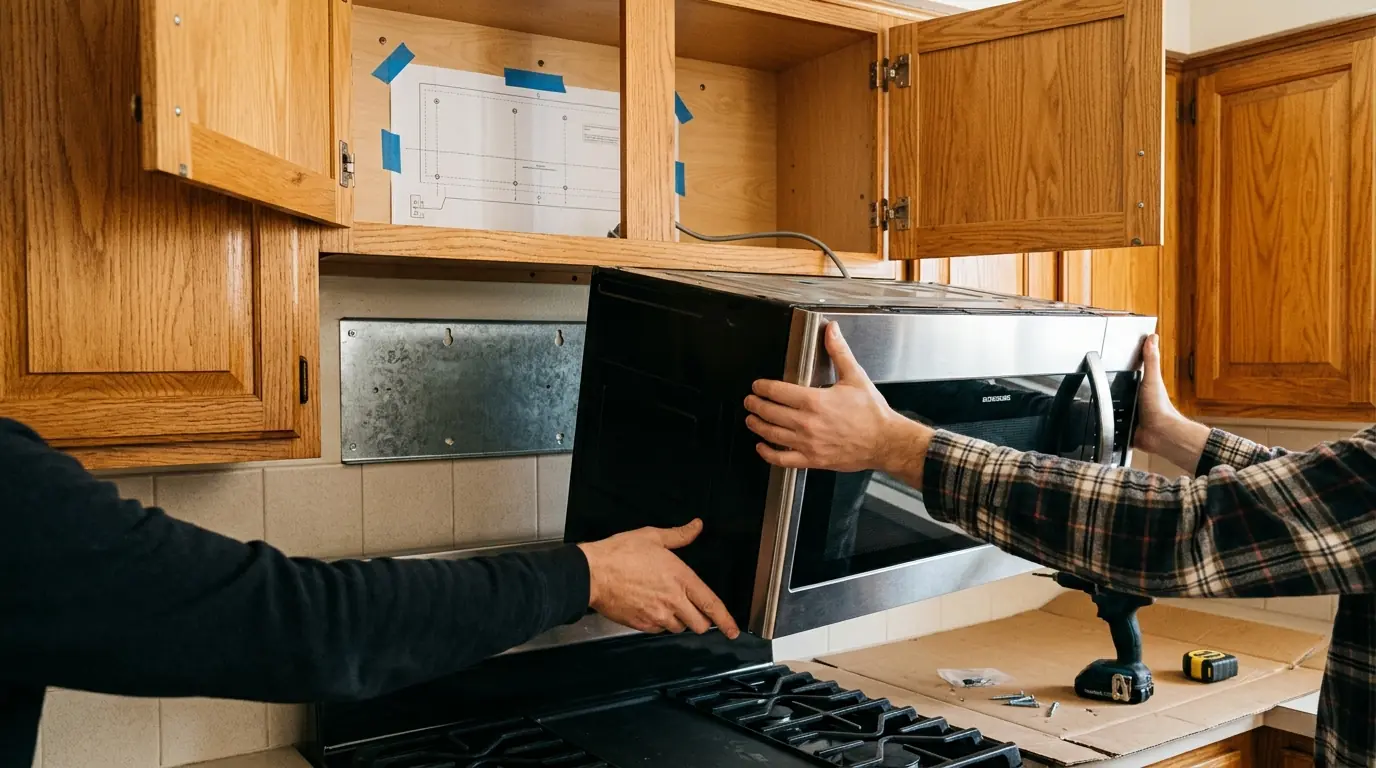
Over-the-range microwave installation in South Bend means fastening the wall plate into studs, bolting the top through the cabinet above, setting the blower for outside venting or recirculation, and confirming a dedicated outlet in the cabinet. We test heating, fan and light before we leave.
The problem
Over-the-Range Microwave Installation in South Bend: What Usually Goes Wrong
Most of a microwave's weight hangs on the wall plate, so the plate has to catch at least one stud, not just drywall anchors. The cabinet above takes the front bolts. Get either wrong and the unit sags forward over the burners, the door binds, and the grease filters stop lining up.
Clearance matters too. Every installation guide sets a minimum gap between the cooktop and the bottom of the microwave, and a minimum cabinet width. We check both against your model before drilling, and tell you before any work starts if the cabinet needs trimming or the range sits too close.
Compare your options
Vent Outside or Recirculate Over Your Range?
| Vented outside | Recirculating | |
|---|---|---|
| Steam and odor | Carried out of the house | Filtered and returned |
| Ductwork | Needs a duct and damper | None |
| Filter upkeep | Grease filters only | Grease plus charcoal filter |
| Suits | Kitchens with an existing duct | No route to the outside |
Cost factors
What Sets the Cost of an Over-the-Range Install
Our cost sources give a microwave repair range but none for installation, so here are the factors that change the job.
Hood removal
Taking down an existing range hood and capping its hardwired connection adds steps and time that a straight microwave-for-microwave swap doesn't need.
Outlet in the cabinet
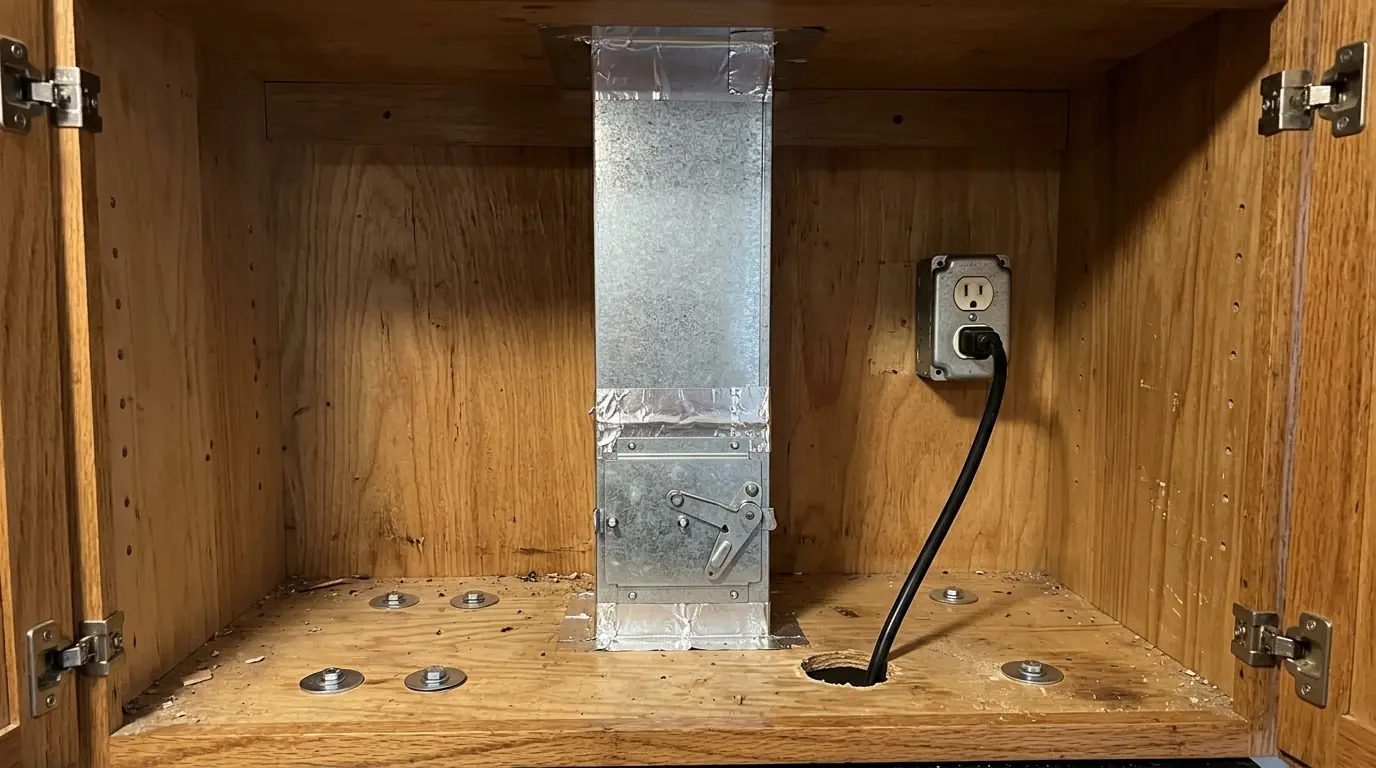
Over-the-range models plug into a receptacle in the upper cabinet. If none exists, one has to be added before mounting.
Venting route
Reusing a duct that lines up is simple. A duct that doesn't line up, or no duct at all, changes the plan and the work involved.
Cabinet condition
Older or thin cabinet bottoms may need reinforcing to take the top bolts securely, especially under heavier convection microwave models.
Replacing a Range Hood With a Microwave
Swapping a hood for a microwave is the most common job we see. The hood comes down, and its wiring is usually hardwired into a junction box, while the microwave needs a receptacle inside the cabinet above. That outlet has to be in place before the microwave goes up. We also look at the old duct: if it lines up with the microwave's exhaust, we reuse it with a new damper, and if it doesn't, we'll show you the options.
Mounting Plate and Cabinet Fit
We find the studs, level the mounting plate and screw it into at least one stud, using the supplied toggle bolts only where the guide allows. The paper template marks the bolt holes and the cord and duct openings in the cabinet bottom. With a helper we lift the microwave, hook it onto the plate's tabs, tilt it up and run the top bolts through the cabinet. Then we check that the door swings freely and the unit hangs square.
Venting Outside Versus Recirculating
Most over-the-range microwaves ship set to recirculate, blowing air through a charcoal filter and back into the kitchen. Venting outside means rotating the blower motor inside the unit to face up or out the back, and connecting it to a duct with a damper. Outside venting clears steam and cooking odor far better; recirculating is the fallback when no duct can be run to an outside wall or roof. We set the blower to match your kitchen before the unit goes up on the wall.
Built-In Trim Kits
Countertop and built-in microwaves can sit in a wall cabinet or an oven tower using a trim kit made for that model. The kit frames the microwave and gives it the air gap it needs to stay cool, so the opening has to match the kit's dimensions, not just the microwave's. We check the cutout, fit the trim, secure it to the cabinet and test that the door clears the frame. A kit for a different model rarely fits right.
Any hour
Over-the-Range Microwave Installation problem right now?
Call and tell us what the appliance is doing. Phones are answered day and night, and we will get a technician scheduled.
Scope of the job
What Every Microwave Install Covers
- Clearance check above the cooktop
- Wall plate fastened into studs
- Top bolts through the upper cabinet
- Blower set for outside or recirculating
- Heating, fan and light test
Local conditions
Why This Repair Looks Different in South Bend
South Bend's median home was built in 1955, and 28.3% of homes date to 1939 or earlier. Kitchens that age often hold a range hood wired straight into the wall, cabinets built before over-the-range microwaves existed, and studs that don't land where the template wants them. On older installs we confirm the cabinet above can carry the bolts and that an outlet can be placed inside it.
Step by step
How the Microwave Goes Up Over Your Range
Measure and check clearance
We confirm the cabinet width and the gap above the cooktop against the model's installation guide before anything is drilled.
Set the plate and template
Studs are located, the wall plate is leveled and fastened, and the template marks bolt, cord and duct holes in the cabinet.
Set the blower and lift
The blower is turned for venting outside or recirculating, then the microwave is hooked onto the plate and bolted through the cabinet.
Test every function
We run a heating test with a cup of water, then check the fan speeds, cooktop light and the outside damper if it vents out.
Brands we repair
- Whirlpool
- Maytag
- KitchenAid
- GE
- Frigidaire
- Samsung
- LG
- Bosch
- Electrolux
- Amana
- JennAir
- Sub-Zero
- Wolf
- Speed Queen
FAQ
Over-the-Range Microwave Installation Questions From South Bend Homeowners
Usually, if the cabinet width matches and there's enough clearance above the cooktop. The microwave needs a receptacle inside the cabinet, while most hoods are hardwired. We check the clearance and the outlet before the old hood comes down off the wall.
Usually the wall plate missed the studs or the top bolts aren't pulled tight into a solid cabinet. A sagging unit strains the door and lets grease filters fall out of line. We remount the plate into studs and resecure the top bolts through the cabinet.
Yes, most ship set to recirculate. For outside venting, the blower inside the unit is rotated to face up or out the back, then joined to the duct with a damper. We set it before mounting, since it's hard to reach after.
Installation guides for most over-the-range models call for a dedicated circuit with the receptacle in the cabinet above. Sharing a circuit with a toaster or kettle can trip the breaker. We check the outlet and its circuit before mounting the microwave.
No. Trim kits are made for specific models and set the air gap the microwave needs to stay cool. Using the kit listed for your model, in an opening that matches the kit's dimensions, is what makes the fit clean and safe.
Related repairs
More Installation & Upkeep Repairs We Handle
Phones answered 24/7
Putting a Microwave Over Your Range?
Tell us the model and what's hanging there now. We'll mount it to studs, set the venting and test every function before we leave. Give us a call to set up the install.