Refrigerators & Freezers
Wine Cooler and Beverage Center Repair in South Bend
A wine cooler that drifts warm, or swings several degrees through the day, puts a collection at risk quietly. We find whether the cooling system, sensor, fans or door seal is responsible.
- Calls answered 24/7
- Compressor and thermoelectric
- Undercounter drawers
Wine cooler repair in South Bend depends on how the unit cools. Compressor coolers fail like small refrigerators: start relays, fans, sensors and dirty condensers. Thermoelectric coolers use a solid-state module and fans, and a dead fan is the most common fault.
The problem
Wine Cooler Repair in South Bend: What Usually Goes Wrong
Wine storage needs a steady temperature more than a cold one, so many calls are about swings rather than outright failure. A cooler cycling between too warm and too cold usually has a drifting sensor, a fan that runs only some of the time, or a gasket letting room air in.
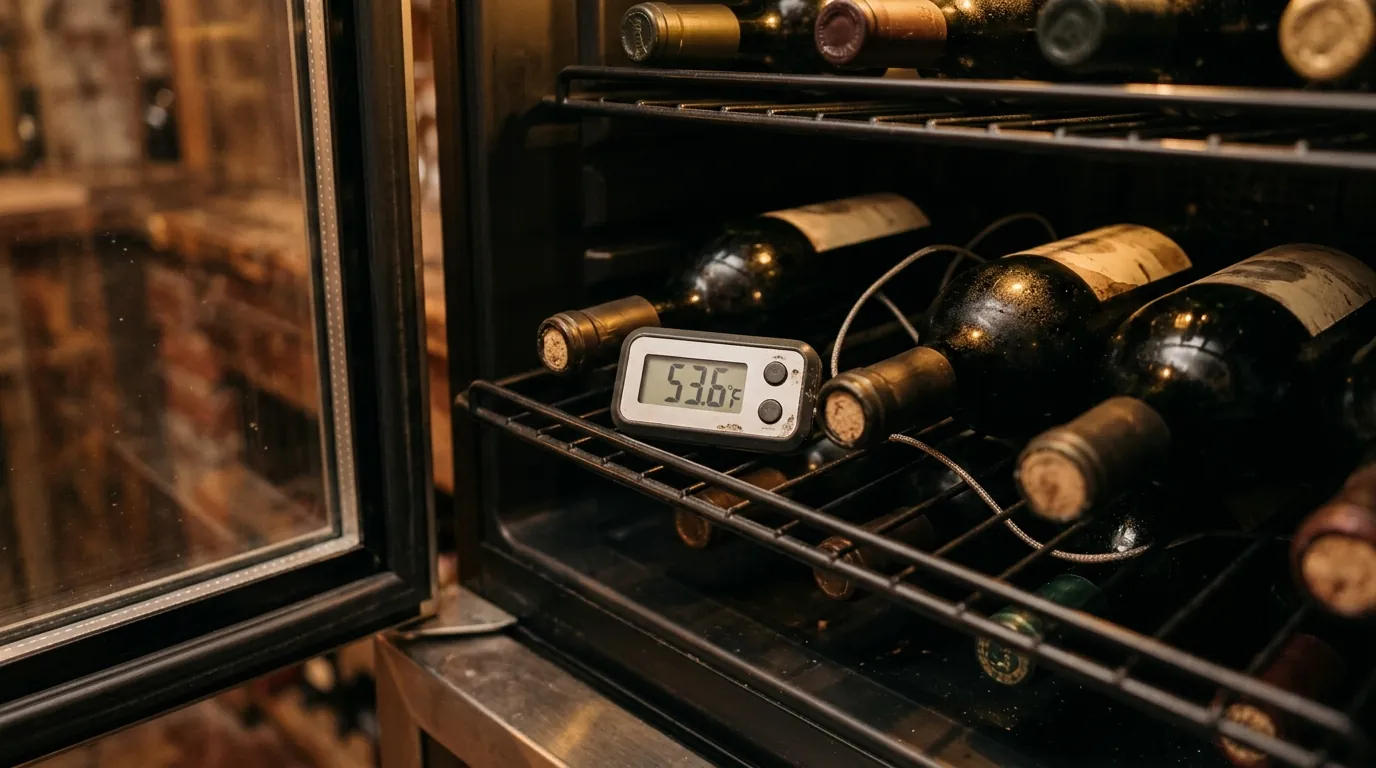
We repair freestanding and built-in wine coolers, beverage centers and undercounter refrigerator drawers from Sub-Zero, Viking, Thermador, KitchenAid, GE, Frigidaire and others. We bring a probe thermometer and log the actual shelf temperature, since the display only shows what the sensor believes, and a drifting sensor is one of the most common faults we find.
Compare your options
Compressor or Thermoelectric: Which Wine Cooler Do You Have?
| Compressor cooler | Thermoelectric cooler | |
|---|---|---|
| How it cools | Refrigerant and compressor | Solid-state module and fans |
| Common failures | Start relay, fans, sensor, dirty condenser | Fans, module, power supply |
| In a warm room | Holds temperature well | Struggles when the room is warm |
| Repair outlook | Most faults are repairable | Fans and modules are often replaceable |
Cost factors
What Wine Cooler Repair Costs Depend On
Our sources list no range for wine coolers. The Inch Calculator appliance repair cost guide reports appliance repair overall at $50 to $500 nationally, not our price.
Dollar figures are typical national planning ranges reported by Inch Calculator appliance repair cost guide. They are not a quote and not our price; your cost depends on the diagnosis.
Compressor or thermoelectric
A thermoelectric module or fan is a contained part. A compressor unit with a refrigerant leak needs sealed system work, which rarely makes sense on a small cooler.
Built-in or freestanding
Undercounter units may need to slide out of their opening for repair, which takes care with the countertop, flooring and connections.
Sensor, fan or board
Sensors and fans cost far less than electronic control boards, so we test sensors and loads before replacing a board.
Parts availability
Parts for well-known brands are generally available. Some imported coolers use parts that are hard to source, which changes the repair-or-replace answer.
Wine Cooler Not Cooling
For a compressor unit, we start where we would on a refrigerator: does the compressor start, does the condenser fan run, is the condenser clean? A start relay that clicks without starting the compressor is a common fault and a small part. For a thermoelectric unit, we check the interior and exterior fans and the module itself. Thermoelectric coolers can only pull the cabinet a limited amount below room temperature, so a unit in a warm room may simply be outmatched rather than broken.
Beverage Center Repair
Beverage centers run colder than wine coolers and get opened far more often, which wears door gaskets and hinges and works the compressor hard. Glass doors that fog or sweat usually mean a failed gasket or a door that no longer closes square. Cans freezing near the back point to a sensor problem or an evaporator positioned close to the shelves. We test the thermistor's resistance against its temperature chart, adjust or replace hinges and replace gaskets that fail the dollar-bill test.
Undercounter Refrigerator Drawers
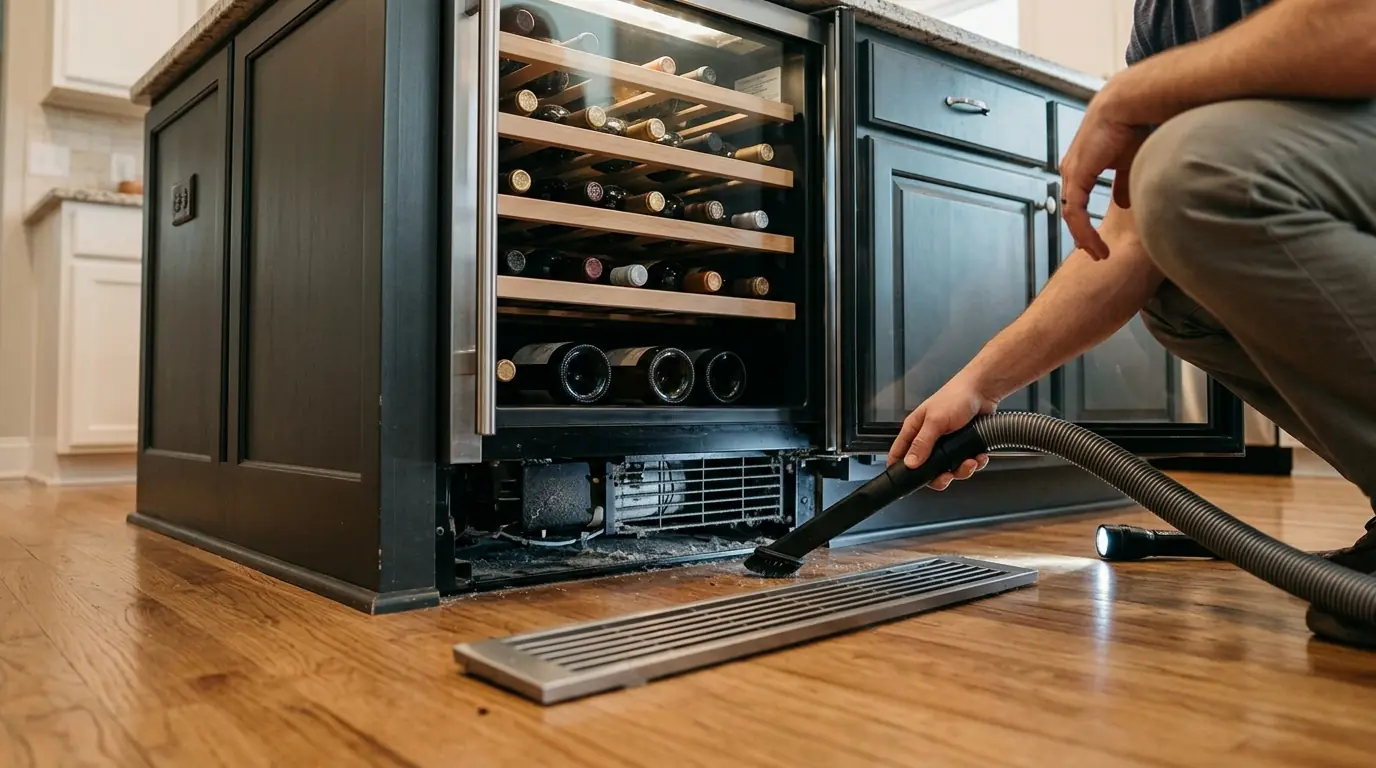
Refrigerator drawers live under a countertop, so ventilation at the toe kick is critical. When the front grille is blocked or dusty, the condenser cannot shed heat and the drawers warm up. Drawer slides and gaskets matter too: a drawer that does not close fully lets warm air in all day. We clean the grille and condenser, test the fans and sensor, and check that each drawer closes firmly against its gasket before we reset the controls. Slide wear is common on heavily used drawers.
Temperature Swings and Humidity
Swings of several degrees usually come from a sensor that has drifted, a control board relay that sticks, or a fan that stops between cycles. Too-dry air can dry corks over time; too-wet air shows as condensation on bottles or mildew on labels. Many coolers have no active humidity control, so humidity mostly follows how often the door opens and how well it seals. We log temperatures, test the sensor and fans, and fix the gasket or control causing the swing.
Any hour
Wine Cooler Repair problem right now?
Call and tell us what the appliance is doing. Phones are answered day and night, and we will get a technician scheduled.
Local conditions
Why This Repair Looks Different in South Bend
Granger, where 95.3% of occupied homes are owner-occupied and about 41% were built in 1990 or later, has many kitchens and finished basements with undercounter wine coolers and beverage centers. Those built-in units vent through the front grille only, so we check that the toe kick airflow is clear on every visit. In basement bars, the bigger risk is a dusty grille that has not been cleaned since the unit went in.
Step by step
How We Diagnose a Wine Cooler
Log the real temperature
We place a probe thermometer on a middle shelf and compare it with the display, which reveals sensor drift right away.
Identify the cooling type
We confirm whether the unit uses a compressor or a thermoelectric module, which sets the list of likely failed parts.
Test fans, sensor and seal
We check each fan, measure the thermistor's resistance against its chart and run a dollar-bill test around the door gasket.
Repair and recheck
After the repair we clean the condenser or heat sink and confirm the cabinet is moving steadily toward its set temperature.
Warning signs
Wine Cooler Problems Worth a Call
Bottles warm to the touch
The cooling system has stopped or a fan has failed.
Condensation on the glass door
A gasket leak or a door hanging out of square.
Display and shelf temperature disagree
The sensor has drifted.
Fan noise that comes and goes
A fan motor bearing starting to fail.
Brands we repair
- Whirlpool
- Maytag
- KitchenAid
- GE
- Frigidaire
- Samsung
- LG
- Bosch
- Electrolux
- Amana
- JennAir
- Sub-Zero
- Wolf
- Speed Queen
FAQ
Wine Cooler Repair Questions From South Bend Homeowners
The display shows what the sensor reads, not the shelf temperature. A drifted sensor, one mounted near the cold evaporator, or poor air circulation can all make them differ. We log the actual temperature with a probe and test the sensor against its chart.
Often, yes. The interior and exterior fans fail most, and they are replaceable; the module and power supply can be replaced on many models too. We check the room first, since thermoelectric coolers cannot cool far below a warm room.
Most often the front grille or condenser is clogged with dust, or something blocks the toe kick. Built-in units vent only through the front, so restricted airflow makes the compressor run long. A failing gasket or sensor can also cause it.
Some moisture is normal after the door has been open. Heavy beading, water pooling in the cabinet or mildew on labels points to a gasket leak, a clogged drain hole or a door that does not close fully. We find which and fix it.
Yes. Freezing cans usually means the temperature sensor is reading warmer than the cabinet, the control is stuck calling for cooling, or the cans sit too close to the evaporator. We test the sensor and control and check airflow around the shelves.
Related repairs
More Refrigerators & Freezers Repairs We Handle
Phones answered 24/7
Protect the Collection: Phone Markley
A slow warm drift is easy to miss until it matters. Phone us, any time of day or night, with the cooler's model number and what the display shows.