The main dryer vent warning signs are loads taking longer than one cycle to dry, a dryer cabinet or clothes that feel unusually hot, lint collecting around the door or outside hood, a burning smell, and a hood flap that doesn't open. In South Bend, snow drifting over the exterior vent hood is a winter cause worth checking first.
Why Airflow Matters More Than the Heater
A dryer works by pushing heated air through tumbling clothes and out the vent, carrying moisture with it. If that air can't leave fast enough, the moisture stays in the drum and the heat builds up in the cabinet. The machine keeps running, the clothes stay damp, and temperatures inside rise toward the limits of the safety thermostats.
Lint is the usual blockage. Every load sheds fibers, and the lint screen catches most but not all of them. The rest settles in the transition hose behind the dryer, the duct inside the wall, and the exterior hood. Dryer fires are a well-documented hazard tied to lint buildup, which is why the vent deserves as much attention as the dryer itself.
The Signs, From Early to Urgent
Restricted airflow rarely appears overnight. It builds over months, and the symptoms progress in a fairly predictable order. Catching it at the first or second sign is far better than waiting for the last.
- Loads need a second cycle, or towels come out damp around the seams
- The top or sides of the dryer feel hot to the touch during a cycle
- Clothes come out much hotter than they used to
- Lint collects on the floor behind the dryer, around the door seal, or on the outside wall
- The exterior hood flap barely moves or stays shut while the dryer runs
- A musty smell in clothes, or a hot or scorched smell in the laundry room
- The dryer shuts off mid-cycle or stops heating, often from a tripped thermal fuse
Snow, Ice and the Exterior Vent Hood
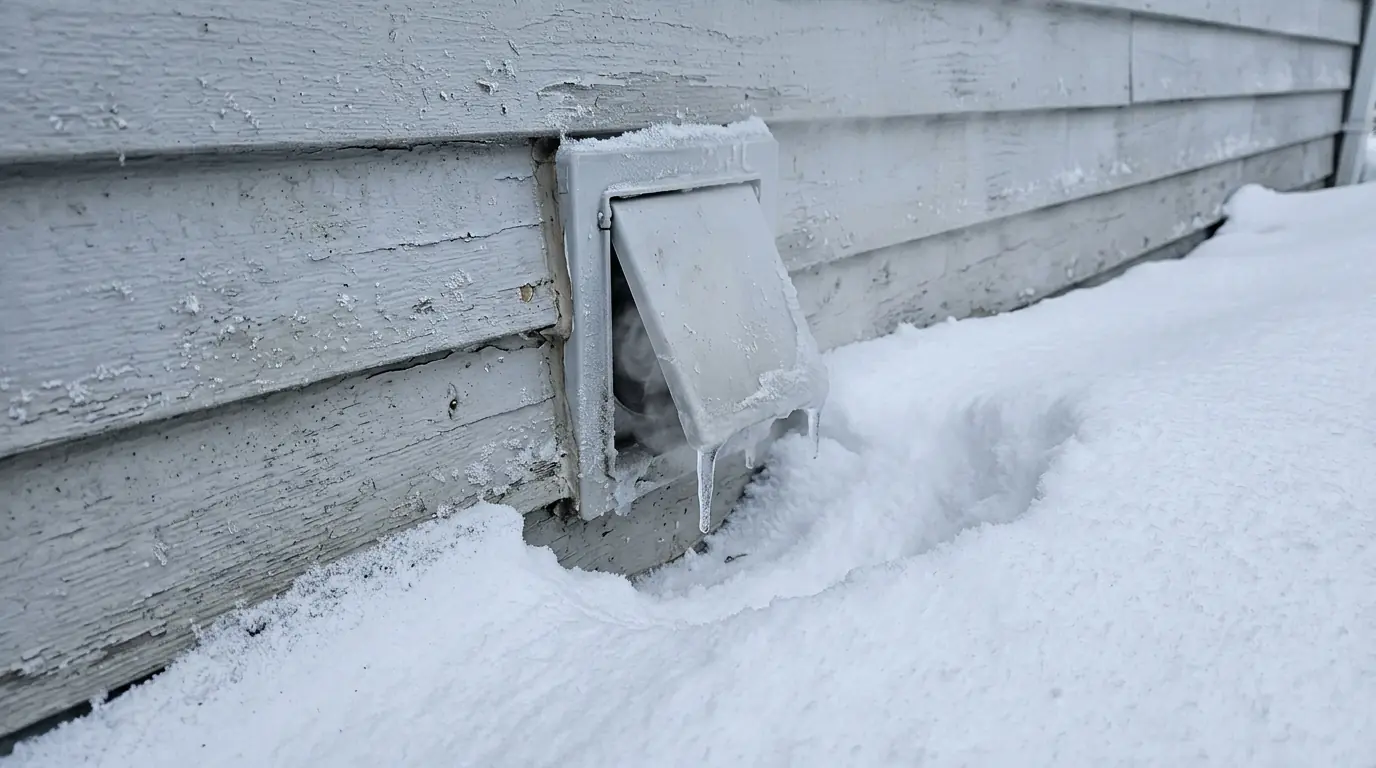
South Bend averages 64.5 inches of snow a year, and heavy snow on a northwest wind off Lake Michigan isn't unusual. Low exterior dryer hoods, especially those on the lake-facing side of a house or near a drift-prone corner, can be buried after a single storm. Moist exhaust hitting cold metal also freezes around the flap, so even a cleared hood can ice shut.
If your dryer suddenly takes twice as long after a snowfall, go outside and look before anything else. Clear the snow away from the hood with a gloved hand or soft brush, knock any ice off the flap, and run the dryer to confirm the flap opens with a steady flow of warm air. Keep the area clear for the rest of the season.
Call us if your dryer is running hot or shutting off, and we'll get a technician out to clear the vent and check the safety parts together.
Checks You Can Safely Do Yourself
Several useful checks need no tools at all. Turn the dryer off before reaching behind it, and on a gas dryer don't move it far enough to strain the gas connector.
- Clean the lint screen every load and wash it with soapy water now and then to remove fabric softener film
- With the dryer running, go outside and feel for strong, warm airflow at the hood
- Look behind the dryer for a crushed, kinked or sagging transition hose
- Replace thin white vinyl or foil accordion hose with a semi-rigid or rigid metal transition duct
- Vacuum the lint screen housing with a narrow crevice tool
When to Call a Technician
Some jobs are better left to someone with the right tools and access. Long duct runs, runs through attics or up to the roof, and runs inside finished walls are hard to clean properly from one end. We use rotary brushes and airflow checks to clear the whole path, then confirm flow at the hood afterward.
Call a technician too if the dryer has stopped heating or shut off on its own. That often means a thermal fuse has blown or a high-limit thermostat has tripped because of overheating. Replacing the fuse without clearing the vent just sets up the next failure. On gas dryers, any work that involves moving the unit or touching the gas line should end with a leak test, which we do with leak solution on every connection we disturb.
Older South Bend Homes and Long Vent Runs
The median home in South Bend was built in 1955 and many are older, built long before modern laundry rooms. In these houses we regularly find dryers moved to a basement corner or closet with a long, winding duct, extra elbows, or a run that exits far from the machine. Every bend and every foot adds resistance and gives lint more places to settle.
If your vent is long or has several turns, have it cleaned more often than you would a short straight run, and check the dryer manual for its maximum recommended vent length. Sometimes rerouting the duct to a shorter path fixes a slow dryer better than any part.
Related repairs
Repairs This Guide Covers
FAQ
More Questions on This Topic
The quickest check is outside: find the exterior hood while the dryer runs. If snow is piled over it or the flap is iced shut, you won't feel the usual strong, warm airflow. A sudden jump in drying time right after a storm is the other clue. Clear the snow and ice gently by hand, then confirm air is moving freely.
Warm is normal; too hot to keep your hand on is not. A cabinet that gets very hot usually means heated air isn't leaving through the vent fast enough. Check for a clogged lint screen, a crushed transition hose or a blocked exterior hood. If those look fine and it's still hot, have the vent run and the dryer's thermostats checked.
For a short, straight run you can sometimes push loose lint out with a blower at the inside end, but it won't remove packed lint from bends or long runs, and it can blow lint into the laundry room. A rotary brush kit works better. For runs through attics, the roof or finished walls, a technician with proper brushes is the safer choice.
A thermal fuse is a one-time safety device that opens when the dryer overheats. Repeated failures almost always mean restricted airflow, usually a clogged or crushed vent, though a failing cycling thermostat or a heating element shorted to the cabinet can do it too. Replacing the fuse alone treats the symptom; the vent and thermostats need to be checked at the same time.
Use a semi-rigid or rigid metal transition duct between the dryer and the wall, kept as short and straight as practical. The thin plastic or foil accordion hoses still found behind many older installations crush easily and trap lint in their ridges. Inside the wall, smooth rigid metal duct is the standard. Check your dryer manual for its recommended maximum length.