South Bend city water is very hard, averaging 19 to 24 grains per gallon, and that mineral load shows up inside water-using appliances. Scale clogs inlet valve screens, coats dishwasher spray arms and heating elements, and shrinks ice cubes. Regular descaling, a correctly set softener and timely filter changes slow the damage; a failed valve or element needs a technician.
What the City Says About South Bend Water Hardness
The City of South Bend reports that its water averages 330 to 410 mg/L as calcium carbonate, which works out to 19 to 24 grains per gallon. The number moves with which wells are in use, so your water can be harder some months than others. The city itself describes that level as very hard, and every gallon that passes through a dishwasher, washer or ice maker leaves a little of it behind.
The city suggests starting a home softener at 19 grains per gallon. That is useful advice for appliances too, because it means even a home with a softener can see scale if the unit is set too low, has run out of salt, or isn't regenerating.
Where Scale Hides Inside a Dishwasher
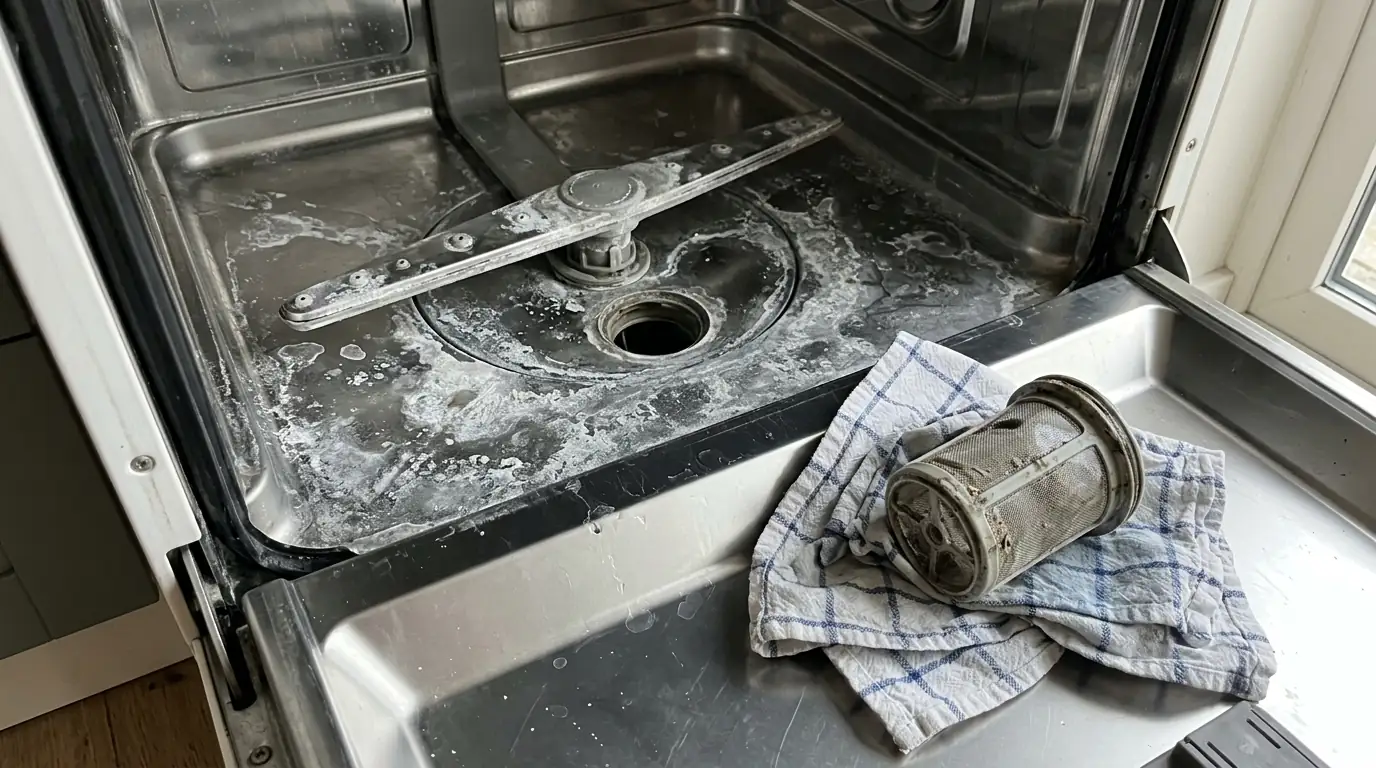
Hard water leaves calcium and magnesium behind every time water evaporates or heats. In a dishwasher that happens in three places we check on almost every South Bend service call. The small holes in the spray arms narrow until water dribbles instead of jets. The heating element or flow-through heater gets a crust that slows heating and can eventually burn it out. And the inlet valve screen, a fine mesh where the water line connects, slowly plugs until the tub underfills.
The symptom you notice is cloudy glasses, gritty film on plates and a white ring on the tub floor. Many people blame the detergent first. Detergent matters, but if the machine isn't getting enough hot water through clean spray arms, no pod will fix it.
Washers: Slow Fill, Error Codes and Short Hose Life
Washing machines have the same mesh screens at the back where the hot and cold hoses attach. As scale and grit build up, fill slows down. Modern washers time the fill, and a slow one can throw a fill error code or start the cycle short of water. Front-load washers are especially sensitive because they use so little water to begin with.
Scale also settles in the bottom of the outer tub and around the drain pump. That's one reason we suggest running a monthly cleaning cycle with a washer cleaner, and it's also why we inspect rubber fill hoses while we're there. Hard water doesn't rot rubber by itself, but an old hose on a scaled valve is a leak waiting to happen.
If you're seeing film, slow fill or shrinking ice cubes, give us a call and we'll check the valves and heaters before the scale costs you a part.
Ice Makers and Water Dispensers Feel It First
A refrigerator ice maker has the smallest water passages in the house. Its inlet valve meters water through a tiny orifice, and a little scale is enough to cut flow. Small, hollow or crescent-shaped cubes that look half-formed are the classic sign. Slow dispenser flow often points the same direction, or to a filter that's overdue.
Minerals also make cloudy ice and can leave white flakes in a glass. The flakes are harmless, but they tell you the water reaching the fridge is loading up the valve and filter. If you have a whole-house softener, make sure the refrigerator line is downstream of it.
- Small or hollow cubes: often a scaled or weak inlet valve, sometimes a clogged filter
- Slow dispenser stream: check the filter date first, then the valve
- Ice maker stopped completely: can be a frozen fill tube, which is a different problem
- White crust on the dispenser nozzle: wipe it with vinegar on a cloth
Hard Water Upkeep You Can Do at Home
Most of the damage hard water does is slow, which means a little routine maintenance buys a lot of appliance life. None of these steps require tools beyond a screwdriver and a bucket, and all of them start with the power off or the appliance unplugged where the step involves anything inside.
- Run a dishwasher cleaner or a cup of white vinegar on the top rack through a hot empty cycle once a month
- Pull and rinse the dishwasher filter under the tub every few weeks
- Keep rinse aid filled; it helps water sheet off glasses instead of drying into spots
- Change the refrigerator water filter on the schedule in your manual
- Check your softener's salt level monthly and confirm the hardness setting is at least what the city suggests
When Scale Becomes a Repair Call
Descaling only helps if the parts still work. An inlet valve with a plugged or damaged screen, a heating element that has failed, or a dishwasher circulation pump struggling with mineral debris needs a technician. We test the valve coil with a meter, measure fill volume, and check heater resistance before we replace anything, so you aren't paying for parts that only needed cleaning.
We also look at the supply side. In South Bend's older houses, where the median home dates to the mid-1950s, we regularly find corroded shutoff valves or old plastic refrigerator lines feeding these appliances. If a softener is part of your setup and it has stopped regenerating, that's worth fixing at the same time, since every appliance downstream benefits.
Related repairs
Repairs This Guide Covers
FAQ
More Questions on This Topic
It can. The City of South Bend says hardness varies with which wells are in use, averaging 330 to 410 mg/L as calcium carbonate, or 19 to 24 grains per gallon. That's why a softener set to the low end of that range can let hard water through at times. Setting it at or above 19 grains, as the city suggests, gives your appliances more margin.
In moderate amounts, yes. A cup of white vinegar in a bowl on the top rack during a hot empty cycle loosens light scale and film. Don't pour it into the detergent cup or use it every load, since acid can be hard on rubber seals over time. For heavy buildup, a dedicated dishwasher descaler is gentler and more effective.
A working, correctly set softener prevents most new scale, but it won't remove what's already there, and it only helps appliances plumbed after it. A refrigerator line tapped from an unsoftened cold line, for example, still sees hard water. If scale keeps returning with a softener in place, the softener may not be regenerating or the resin may be worn.
Small or hollow cubes usually mean the ice maker mold isn't filling completely. With hard water the most common cause is scale or debris restricting the refrigerator's water inlet valve, or a filter past its change date. Low house water pressure can do it too. Change the filter first; if cubes stay small, the valve likely needs testing or replacement.
Untreated hard water speeds up wear on any dishwasher, new or old. Scale narrows the spray arm holes, crusts the heating element and slowly plugs the inlet valve screen, so the machine works harder for weaker results. Using rinse aid, cleaning the filter, running a monthly descaling cycle and keeping a softener set correctly keeps a new machine performing the way it did on day one for longer.
After the softener is usually better for the appliance, because softened water is far kinder to the inlet valve and ice maker. Some homeowners prefer unsoftened water for drinking and connect the fridge to a separate cold line. If you choose that, keep up with filter changes and expect to deal with scale on the valve sooner.