When a refrigerator isn't cooling, first confirm it has power and the controls weren't bumped, then make sure food isn't blocking the vents, the doors seal, and the condenser coils aren't matted with dust. If the freezer is cold but the fridge is warm, a defrost or fan problem is likely and needs a technician.
First, Protect the Food
Before troubleshooting, buy yourself time. Keep the doors closed as much as possible. A full freezer holds its temperature longer than an empty one, and a closed refrigerator stays cool for a few hours. Put an appliance thermometer in the fresh food section if you have one; food safety guidance generally calls for 40F or below in the fridge and 0F in the freezer.
If the fridge has clearly been warm for a while, move perishables like milk, meat and leftovers to a cooler with ice or to another refrigerator. Then you can work through the checks without racing the clock.
Five Checks That Take Ten Minutes
A surprising share of warm-fridge calls come down to something simple. Work through these in order before assuming a part has failed.
- Power: is the interior light on and can you hear the compressor or fans? Check the breaker and any GFCI outlet that may have tripped
- Controls: make sure the temperature setting wasn't bumped, and that the unit isn't in a showroom or demo mode, which runs lights but not cooling
- Vents: rearrange food so nothing blocks the air vents between the freezer and fridge sections
- Door seals: close the door on a dollar bill; if it slides out easily, the gasket isn't sealing there
- Condenser coils: with the fridge unplugged, vacuum the coils underneath or behind it and clear the area around the condenser fan
Read the Pattern: Which Part Is Warm?
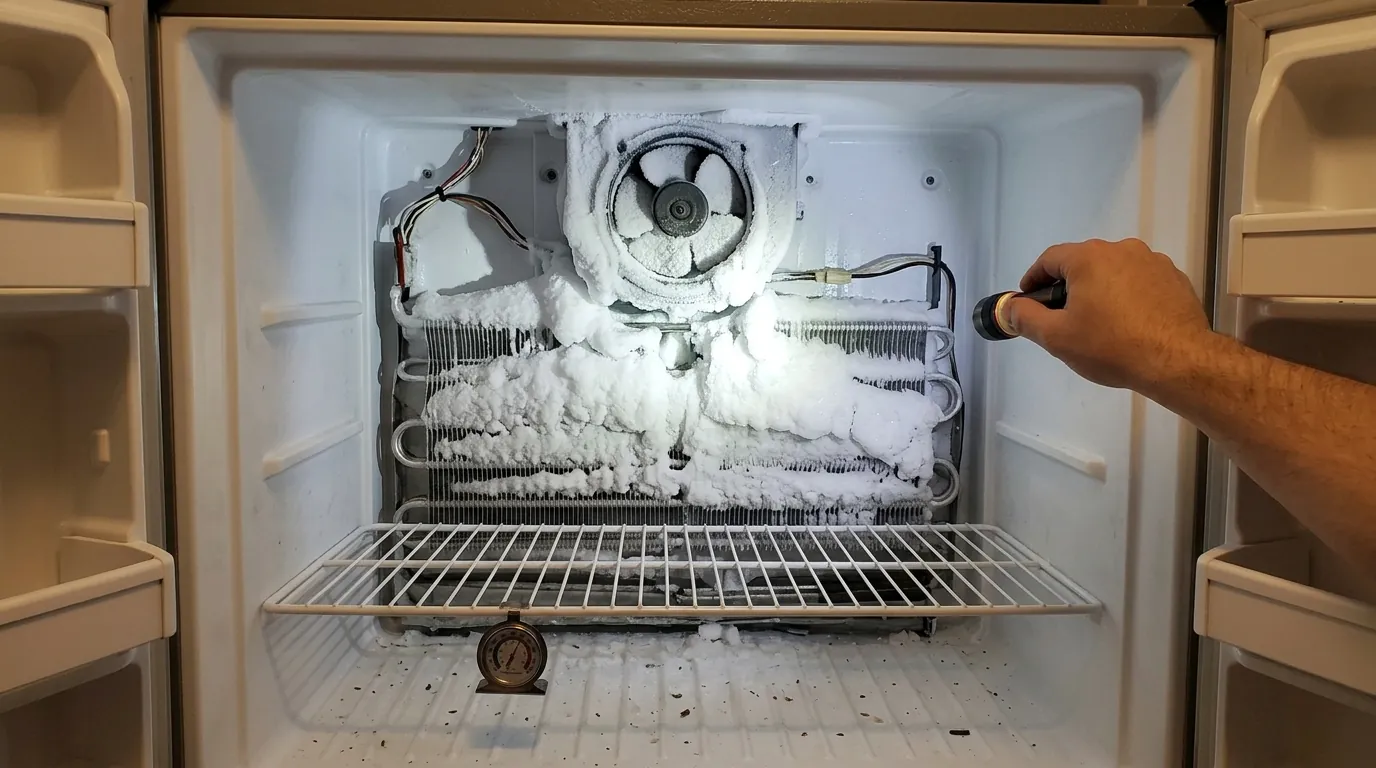
Where the warmth is tells you a lot about the cause. If the freezer is cold but the fresh food side is warm, cold air isn't getting from the freezer to the fridge. On most modern refrigerators the cold is made in the freezer and blown into the fridge through a duct, so a stopped evaporator fan or an evaporator coil choked with frost will produce exactly this pattern.
If both sections are warming and the compressor runs constantly, suspect the condenser side: dirty coils, a failed condenser fan, or in the worst case a sealed system problem. If both are warm and the compressor isn't running at all, the cause is often a start relay, a control board or the compressor itself.
If the checks above don't bring the temperature down, give us a call any hour and we'll get a technician out before the food is lost.
Frost on the Back Wall and Defrost Problems
Remove the freezer's back panel cover only if you're comfortable doing so with the unit unplugged, or simply look through any vent openings. A thick, snowy layer of frost over the evaporator coil means the automatic defrost system isn't working. Normally a heater warms the coil a few times a day to melt off frost. When the heater, its thermostat, or the defrost timer or control fails, frost builds until air can't pass.
Unplugging the fridge for a day with the doors open will melt the frost and usually restore cooling for a while, which confirms the diagnosis. It doesn't fix the cause, and the frost will return. We test the defrost heater, bimetal thermostat and control with a meter and replace the failed part.
Noises That Point to a Failing Fan
Fans are a common and fixable cause of poor cooling. A squealing or chirping that gets louder when the freezer door opens usually means the evaporator fan motor is failing or its blade is hitting ice. A buzzing or rattling from underneath points to the condenser fan, often with dust and debris in the way.
On the other hand, rapid clicking from the back every few minutes with no compressor hum usually means the compressor is trying to start and failing. The start relay or overload may be the cause, or the compressor itself. That's a meter job, not a guess.
Where Homeowner Checks Stop
You can safely clean coils, check settings, clear vents and test door seals. Leave the rest to a technician. Refrigerators have line-voltage wiring behind the panels, and the sealed system holds refrigerant under pressure. Diagnosing a leak, a restriction or a weak compressor takes gauges, refrigerant recovery equipment handled under federal refrigerant rules, and brazing tools for the repair.
This Old House reports refrigerator repair at $200 to $500 nationally, with an average of about $400, as a planning range. Fan, relay and defrost repairs usually sit toward the lower part of that band. Sealed system work is at the top, and on an older fridge it's often the point where replacement deserves a look.
Summer Heat and Second Refrigerators
South Bend sees a handful of 90-degree days each summer, about 4.8 in July on average, and the all-time high is 104F. Refrigerators in hot kitchens, enclosed alcoves, porches or garages work hardest on those days, and a marginal fan or dusty coil often gives out then. If your fridge struggles every heat wave, clean the coils before summer and make sure it has the airflow clearance the manual calls for.
Dollar figures are typical national planning ranges reported by This Old House appliance repair cost guide. They are not a quote and not our price; your cost depends on the diagnosis.
Related repairs
Repairs This Guide Covers
FAQ
More Questions on This Topic
On most frost-free refrigerators, cold air is made at the freezer's evaporator coil and blown into the fresh food section. If the evaporator fan has stopped, or the coil is blocked with frost from a defrost failure, the freezer may stay cold while the fridge warms. Listen for the fan with the freezer door's switch pressed, and look for heavy frost on the back wall.
Give it several hours, and up to a day for a full return to set temperature. Cleaning dusty coils helps the condenser shed heat, but the effect shows up gradually. Keep the doors closed and use a thermometer in a glass of water on a middle shelf. If it hasn't improved after a day, the coils weren't the main problem.
Yes, as a temporary step. Unplug the fridge, move the food, open the doors and put towels down to catch meltwater. Never chip at the ice with sharp tools, which can puncture refrigerant tubing. If cooling returns afterward, the defrost system likely failed and the frost will come back within days or weeks, so plan for a repair.
A click, a pause of a few minutes and another click, with the fridge warming, usually means the compressor is trying to start and the overload is shutting it off. A failed start relay is a common and relatively inexpensive cause. A compressor that has seized or has an internal fault produces the same symptom, and only meter testing tells the two apart.
It can contribute, especially if a gasket is torn or the door is sagging, because warm, humid air leaks in constantly. That usually shows up as sweating, frost near the door and long run times rather than a sudden complete loss of cooling. Test with a dollar bill all around the door. Gaskets are replaceable and it's worth doing before bigger repairs.